When it comes to purchasing the right microphone for your needs, the amount of available options can be overwhelming. For this reason, we have outlined an overview of common microphone types, as well as listed of some of our favorite and recommended microphones.
Microphone Type Overview
Dynamic Microphones:
Dynamic microphones are known for their durability, versatility, and ability to handle high sound pressure levels. They can deliver good results on most sound sources, including vocals, electric instruments, and drums. Sonically, most dynamic microphones tend to have a more neutral or flat sound as opposed to condenser microphones.
Condenser Microphones:
Condenser microphones are another popular type of microphone used for recording. Condensers tend to sound more “hi-fi” and “modern” than dynamic microphones, due to their extended frequency response and detail. Unlike dynamic microphones, most condenser microphones cannot handle high sound pressure levels, or begin to distort when recording them. For this reason, condensers are a popular choice for recording vocals, stringed instruments, and distanced drum microphones (overhead and room microphones). Condensers also require power to operate; this is usually provided to the microphone via phantom power, which is usually a switch or button labelled as “+48v” on an audio interface or preamp.
It is worth noting that there are different types of condenser microphones; mainly, condensers can either have a large or small diaphragm. Small-diaphragm condensers capture more detailed transient information, so they are often used for drum overhead microphones. Large-diaphragm condensers capture less detailed transient information, and thereby are used on sources that are not percussive, such as the human voice or stringed instruments.
Tube Condensers:
Tube condensers are another type of condenser microphone that are extremely popular for recording vocals. Tube condensers use an external power supply and vacuum tube to provide power to the microphone, as opposed to phantom power. Tube condensers, due to their use of vacuum tubes, tend to provide far more sonic coloration and character than normal condensers, which can be considered more “neutral” or accurate. This sonic coloration is highly sought after, and, with the additional design and parts required for their use, the price of tube condensers can be extremely high, with some high-end tube mics retailing at over $10,000.
Modeling Microphones:
In recent years, several companies have created a new type of microphone called a modeling microphone. These microphones capture a very flat and transparent signal, then use software to digitally emulate the sonic characteristics of several different microphones. This allows users to record their source, then select the microphone's tonality after recording. For example, a singer could record themselves with the modeling microphone, then decide which microphone emulation sounds best for their voice after the fact. This technology is relatively new, but has received very positive reception in the pro audio community. Slate Digital, Townsend Labs, and Antelope Audio all have their own modeling microphone systems.
Clone Microphones:
Over the past 20 years, a large amount of existing and new audio manufacturers have begun creating clone gear, including microphones. The goal of this clone gear is to offer reproductions of highly sought-after and out-of-production gear to consumers, usually at a far lower price than their original counterparts. These manufacturers create these clones at a lower price by using lower cost or bulk-ordered components. Lower cost clones tend to sound similar to the originals, but due to their cost savings measures, may sound a little lower in quality. However, there are also high-end clone manufacturers that produce clones that sound extremely similar to their original counterparts. For example, several companies make clones of the coveted Neumann U47; however, the price and quality of these clones varies greatly, from Warm Audio's ~$950 clone to Flea Audio's ~$4,000 clone.
Warm Audio, Universal/Bock Audio, and Peluso Audio are some of the more popular clone manufacturers, but there are an endless amount of companies manufacturing clone microphones.
Support Picks: Microphones
Below are our recommendations for microphones for a variety of use cases. Our recommendations are divided into different categories of:
- Foundational: A great starting point that will serve a variety of scenarios
- Advanced: A slightly higher point of entry in terms of price. These microphones may provide greater detail, versatility, and/or build quality.
- Premium: These microphones are for when budget is not a concern. None of these microphones are required for our courses, but these high-end options are worth mentioning.
- Use Specific: These microphones are either specially designed to, or are often used, on specific instruments.
Foundational
Dynamic
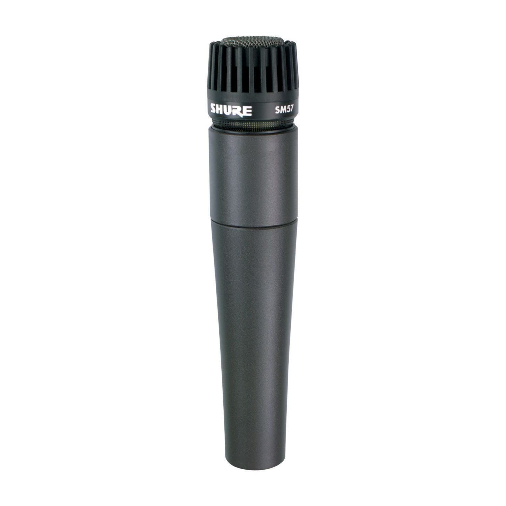
- Shure SM57: The SM57 is an industry-standard microphone, and perhaps the most popular microphone of all time. It is often used for recording instruments such as guitar amps, drums, and brass instruments. It is considered to sound generally “good” on any possible recording source, and is very budget-friendly, costing around $100. In addition, it can withstand rough handling, so much so that it is often joked that the SM57 can not only be used as a microphone, but also a hammer.
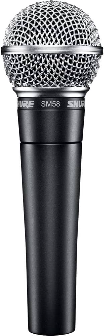
- Shure SM58: The Shure SM58 is, in essence, the exact same microphone as the SM57, but with the addition of a bar grille in front of the diaphragm. It is a popular choice for use in live performance, specifically for vocals, due to its durability and added grille.
Large Diaphragm Condenser
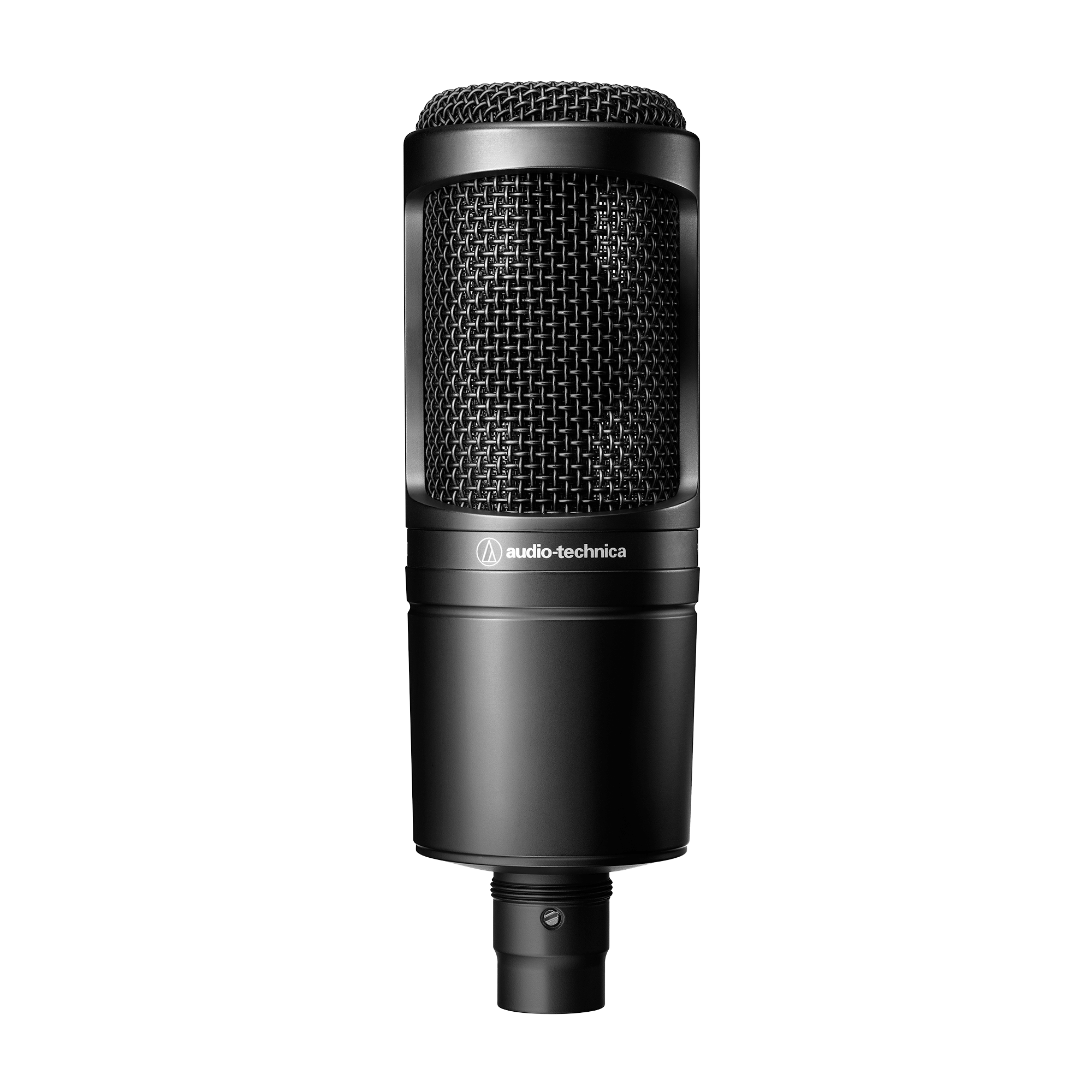
- Audio-Technica AT2020: The AT2020 is a decent-sounding, budget-friendly microphone that retains the general characteristics of condensers. This is a great microphone to use to enter into the condenser world for the first time. As a budget microphone, it may produce small resonances or harmonic distortion, but in general, it sounds good.
- Rode NT1: The Rode NT1 is another budget-friendly large diaphragm condenser microphone. Many find the NT1 to be a clearer, more natural sounding mic than the AT202, due to its generally flatter frequency response. It is worth noting that the NT1 does have a pronounced high-end boost (more so than the AT2020), which can make the microphone sound more “airy" and potentially even harsh. However, this is accompanied with a flatter response in the low and mid range frequencies than the AT2020. Overall, the NT1 is considered to be the better mic compared to the AT2020.

Small Diaphragm Condenser
- Rode M5: The Rode M5 is an affordable matched pair of small diaphragm cardioid condenser microphones known for their clean, detailed sound and solid build quality, making them a popular choice for beginners and budget-conscious engineers on acoustic instruments and drum overheads. Sonically, they’re a bit brighter and less refined than higher-end options like the Neumann KM184, offering good clarity and presence but with a slightly more pronounced high-frequency emphasis.

- Audix ADX51: The Audix ADX51 is a professional small-diaphragm condenser microphone with a smooth, uniform cardioid response and solid brass body that excels on drum overheads, acoustic instruments, and live applications while handling high SPLs with low noise and useful pad/low-cut switches. Compared with the Rode M5—which is a more budget-oriented, bright small-diaphragm pair—the ADX51 generally offers a richer, more controlled top end and greater overall versatility and robustness in both studio and stage settings.

Advanced
Dynamic
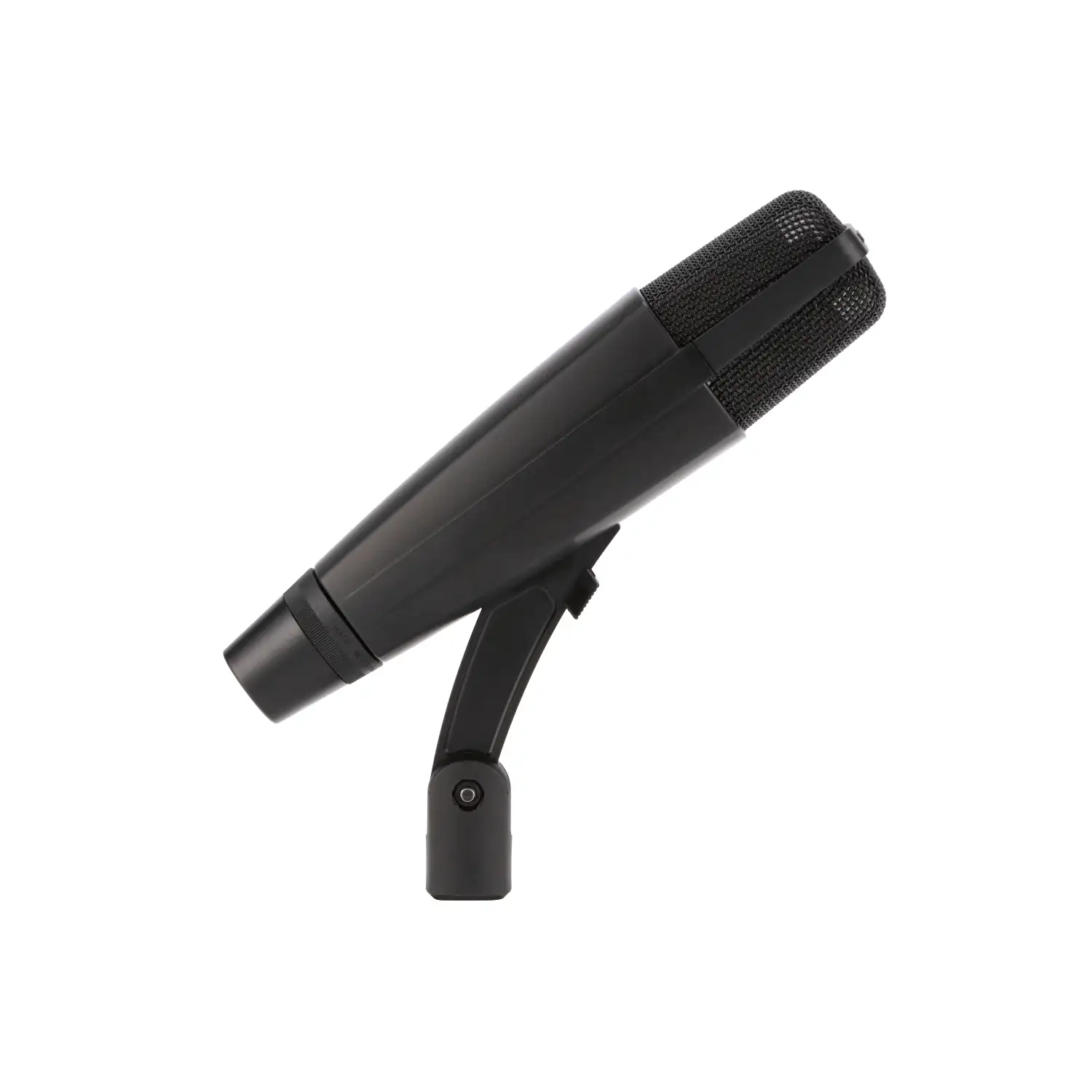
- Sennheiser MD 421: The Sennheiser 421 is another versatile dynamic microphone. The 421 has a similar frequency response to the SM57, but a slightly different character. This is due to its more pronounced low end, upper mid-range, and high-end response, which give it a fuller, more aggressive sound compared to the more neutral sounding SM57. Many find this to be a better alternative to the SM57, as it has the same general vibe, but less of the SM57's “honk.”
- Shure SM7B: The Shure SM7B is highly regarded for its exceptional vocal reproduction. Sonically, it leans more towards the modern and high fidelity sound of a condenser microphone, but also retains some of the neutrality of other dynamic microphones. Cost-wise, it is considered to be a mid-level microphone. Due to its high-quality sound, and relatively low cost, it is an extremely popular microphone for vocal applications of all kinds, including radio, podcast, and music recording.
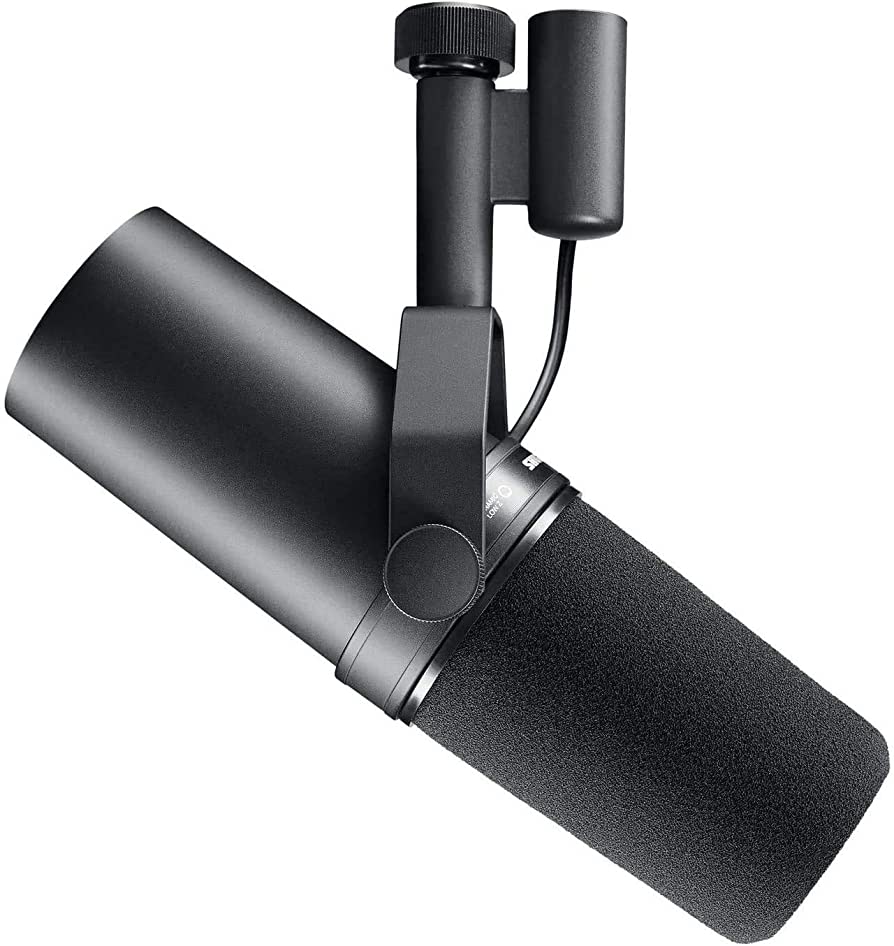
- Electrovoice RE20: Similar to the Shure SM7B, the RE20 is another microphone renowned for its vocal reproduction ability. It also has modern and high fidelity sound, and is often used for many vocal applications, especially broadcasting. The RE20 has a flatter frequency response than the SM7B, mainly due to its even low end and extended high end response relative to the SM7B.

Large Diaphragm Condenser
- Audio-Technica AT4040: The AT4040 is a smooth, professional-sounding condenser microphone that delivers clean, natural recordings with plenty of detail. It’s a great choice if you’re ready to step up from budget gear and want a more refined sound. With low self-noise and the ability to handle loud sources, it works well for vocals, instruments, and general studio use. Unlike the budget-friendly AT2020, the AT4040 also has a switchable 80hz hi-pass filter and 10dB pad.

- Rode NT2A: The NT2-A is a versatile large-diaphragm condenser microphone that offers switchable polar patterns, pads, and a high-pass filter, making it useful for a wide variety of recording situations. It has a clear, detailed sound with a noticeable high-end presence, which can make vocals sound airy but may also bring out sibilance or harshness if not managed carefully. Compared to the AT4040, the NT2-A has a bigger, smoother high end boost, causing it to sound airer than the AT4040. Overall, it’s a great choice if you want a feature-rich mic with a modern, detailed tone.

Small Diaphragm Condenser
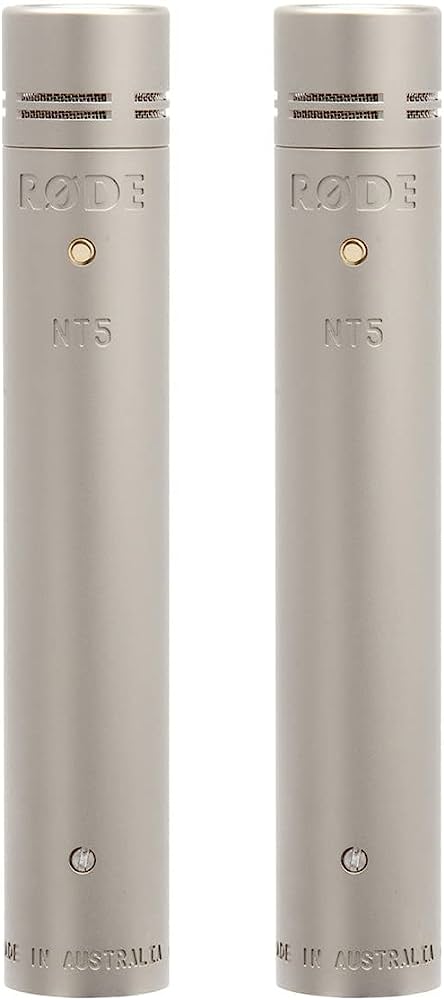
- Rode NT5: The NT5 is a budget-friendly small diaphragm condenser. It sounds similar to the SM81 (introduced below), but has a brighter frequency response.
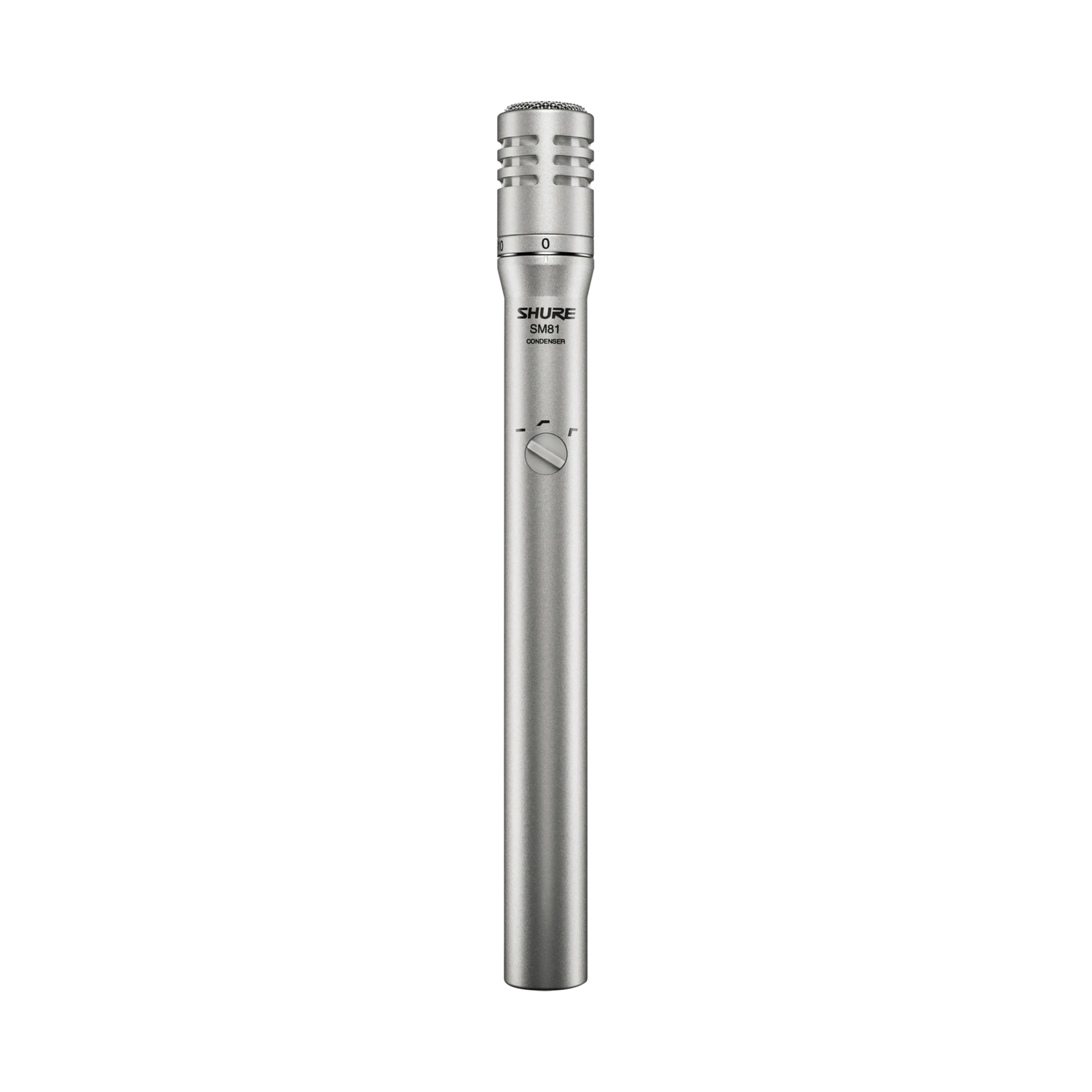
- Shure SM81: The SM81 is a slightly more expensive small diaphragm condenser. Sonically, it has a flatter frequency response, unlike a lot of small diaphragm condensers.
- AKG C1000S: The AKG C1000S is another budget-friendly small diaphragm condenser microphone. It is the brightest of the three microphones listed in this section, and can be harsh on specific bright sources, such as bright cymbals. However, it may be useful for darker sources, such as dark cymbals.

Premium
Dynamic
- Sennheiser MD 441: The Sennheiser MD 441 is premium dynamic microphone known for its smooth frequency response and high quality sound. It is often considered to sound “condenser-like," and has two onboard equalization controls to control the microphones low and high end response. It is often used for broadcasting and recording instruments in great detail.

Large Diaphragm Condenser
- Neumann TLM103: The Neumann TLM 103 is a large-diaphragm, cardioid condenser microphone known for its ultra-low self-noise and pristine, detailed sound, making it a go-to choice for vocals, instruments, and broadcast recording. It’s essentially a modern, transformerless take on the classic U 87 sound, offering clear presence and studio-grade performance in a more accessible package

- Neumann U87: The Neumann U87 is the iconic large-diaphragm condenser microphone that has been a cornerstone of professional recording studios since the late 1960s, known for its smooth, balanced sound and versatility across vocals, instruments, and broadcast work. It features three selectable polar patterns and has been a lasting industry standard for high-end studio work.

- AKG C414: The AKG C414 is another iconic large-diaphragm, multipattern condenser microphone know for its versatility and clarity, with switchable polar patterns (up to nine on modern XLS/XLII versions) that make it ideal for recording vocals, instruments, and room ambience. Sonically, most versions of the C414 are brighter than the more balanced U87, with versions such as the XLII being considered harsh on some sources, while others, such as the XLS, offering only a slight presence boost.

- Shure KSM44: The Shure KSM44 is a large-diaphragm, multipattern condenser microphone known for its low self-noise, neutral frequency response, and solid versatility across vocals, piano, acoustic instruments, and overheads. Sonically, it is generally flatter and less colored than a U87 or C414, offering a clean, transparent sound that can feel slightly less “characterful” but highly accurate and forgiving on a wide range of sources.

Small Diaphragm Condenser
- Neumann KM184: The Neumann KM184 is a small-diaphragm cardioid condenser microphone developed as a modern, transformerless offshoot of the legendary discontinued Neumann KM84, retaining its reputation for accuracy while adding lower self-noise and higher output. Sonically, it features a slightly brighter top end than the KM84, delivering clean detail and excellent off-axis response that make it a staple for acoustic instruments, drum overheads, and stereo recording.

- AKG C451B: The AKG C451B is a small-diaphragm condenser microphone renowned for its crisp, detailed high end and transient response—making it excellent on cymbals, acoustic instruments, and drum overheads. Compared with the smoother, more neutral Neumann KM184, the C451B is generally brighter and more forward in the high end frequencies.

- DPA 4000 Series: The DPA 4000 series small-diaphragm condenser microphones are high-end, precision-engineered mics known for their ultra-clean and transparent sound, making them ideal for critical studio and live applications where accuracy matters most. Unlike traditional cylindrical bodies, the 4000 series uses a distinctive modular head and body design with a separate preamp section that helps reduce handling noise and interference. Sonically, they’re generally more neutral and “true to source” than the slightly warmer Neumann KM184, with less presence emphasis and coloration, resulting in an extremely faithful capture that excels on acoustic instruments, ensembles, and drum overheads without adding brightness.

Use Specific
Electric Guitar
- Shure SM57: Detailed in the foundational section above, the SM57 is probably the most popular microphone to close-mic electric guitar amps due to a variety of factors. First, the SM57's frequency response is well suited to capture the mid-range character of an electric guitar and amp, thanks to its high- and low-end roll off, generally flat mid-range, and a slight boost in the upper mid-range. In addition, as a dynamic microphone, it can handle the extremely high sound pressure levels created by a loud guitar amplifier without distorting. Although popular, some find the SM57 to be excessively “honky” sounding, and it will sometimes be used in combination with a fuller-sounding microphone.
- Sennheiser e609: The Sennheiser e609 is a budget-friendly dynamic microphone intended to be used as a close microphone on a guitar amplifier. Unlike most dynamic microphones, it is a square, side address microphone (the diaphragm is on the side of the microphone instead of the front). Due to this, it can easily and quickly be placed in front of a guitar amplifier, and is a popular choice in live settings for its ease of use. Sonically, the microphone has a more scooped sound than the SM57 and 421.
- Sennheiser 421: Detailed in the advanced section above, the Sennheiser 421 is another dynamic microphone that is a great choice for close-miking guitar amps. Like the SM57, it can handle the extremely high sound pressure levels put out by a guitar amplifier, and it's more aggressive character can be desirable in certain guitar recording situations
Drums
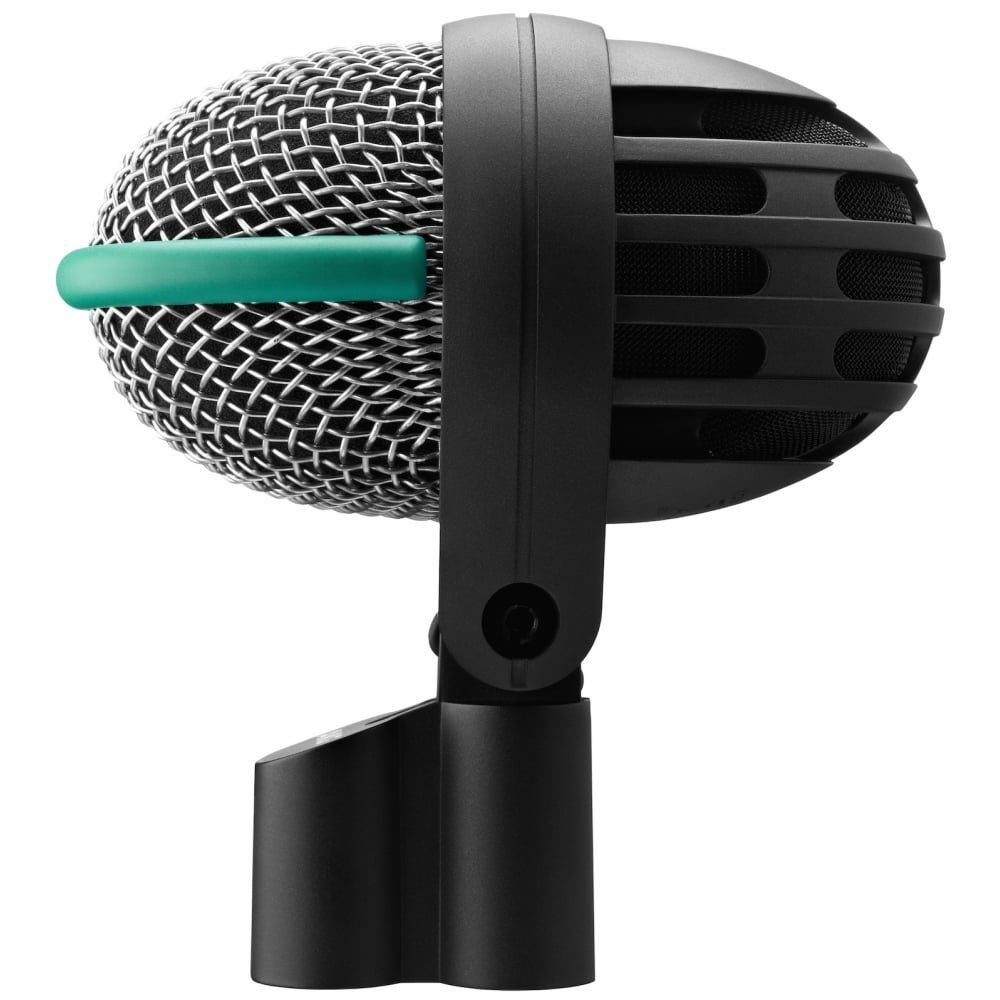
- AKG D112: The AKG D112 is a dynamic egg-shaped microphone specifically designed for recording kick drum. Its frequency and transient responses are specifically tailored to emphasize the low end and “click” of a kick drum. It is often considered the most neutral sounding of the various kick drum mics available, as it still captures a decent amount of mid-range, and is not a completely “scooped” microphone.
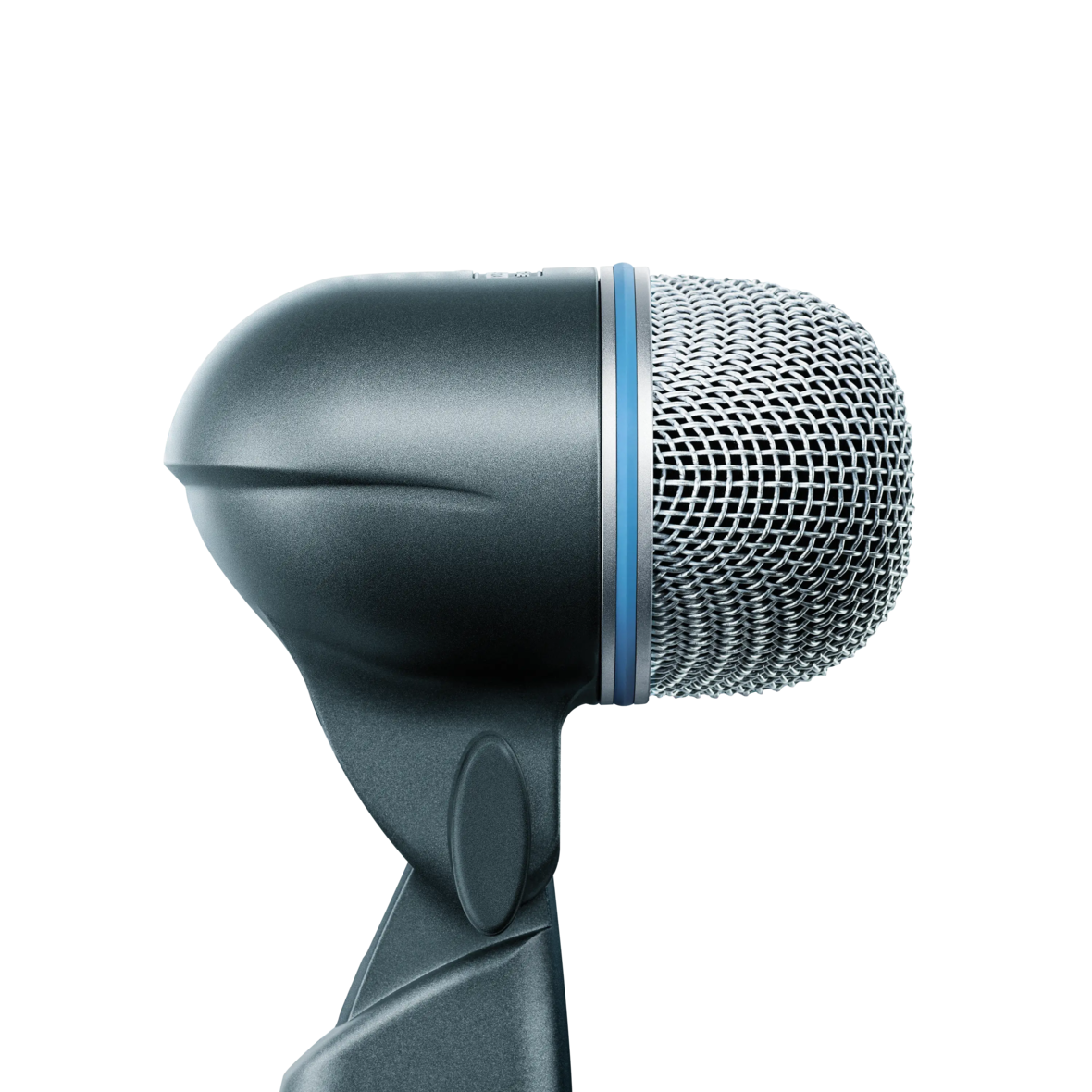
- Shure Beta 52: The Shure Beta 52 is another dynamic kick drum microphone. The Beta 52 is far less neutral than the D112, owing to a large upper mid-range peak and low mid-range scoop in its frequency response. This gives the microphone far more click-y and modern sound than the D112, veering into sounds found in modern rock and perhaps even metal.
- Shure SM57: The Shure SM57 is one of the most popular microphones used to record snare drum, mainly due to its frequency response and ability to handle high sound pressure levels. The SM57's low-end roll off helps to avoid picking up any unnecessary bass frequencies below the snare drum's fundamental frequency, which is typically between 100 Hz and 250 Hz. In addition, its upper mid-range bump helps to emphasize the “crack” of the drum, and its flatter mid-range response helps to maintain a neutral sonic representation of the drum. Finally, the SM57's slight high-end roll off can help to reduce some cymbal bleed into the microphone.
- Rode NT5 (Pair): The Rode NT5 is a budget-friendly small diaphragm condenser microphone. Its price point and good sound quality make a matched pair a great option to use as drum overhead microphones.