Sean Slade helped shape the sound of ’90s alt-rock, from Boston’s Fort Apache studio to Radiohead’s breakout hit “Creep.” In this Q&A, he shares the stories, instincts, and creative risks behind those sessions, along with the lessons that continue to guide his work as a producer and educator, teaching in Berklee Online’s Music Production grad program.
As a musician, not all of your practice will be on your instrument. Some of it will be in your head, and some of it may even be on objects that just look like your instrument. We call this mental practice, and in this excerpt from Barbara LaFitte’s Practicing Techniques for Musicians course, the former principal oboist in the Boston Ballet Orchestra shares tips on how to practice your instrument when you just aren’t able to actually play your instrument.
Wondering where to take your music career? Explore the best cities for your professional life through expert advice from Berklee Online instructors and alums who currently live and work in Nashville, Los Angeles, New York City, and Miami.
Cindy Blackman became Lenny Kravitz’s drummer after a lifetime of jazz drumming. In this wide-ranging interview she discusses being visited by the spirits of the jazz greats she befriended during her time in New York City, and how she and husband Carlos Santana stay in harmony, onstage and off.
How Decades of Work with Music Legends Shaped Matt Rollings’ Approach to Session Playing, Producing, and Teaching
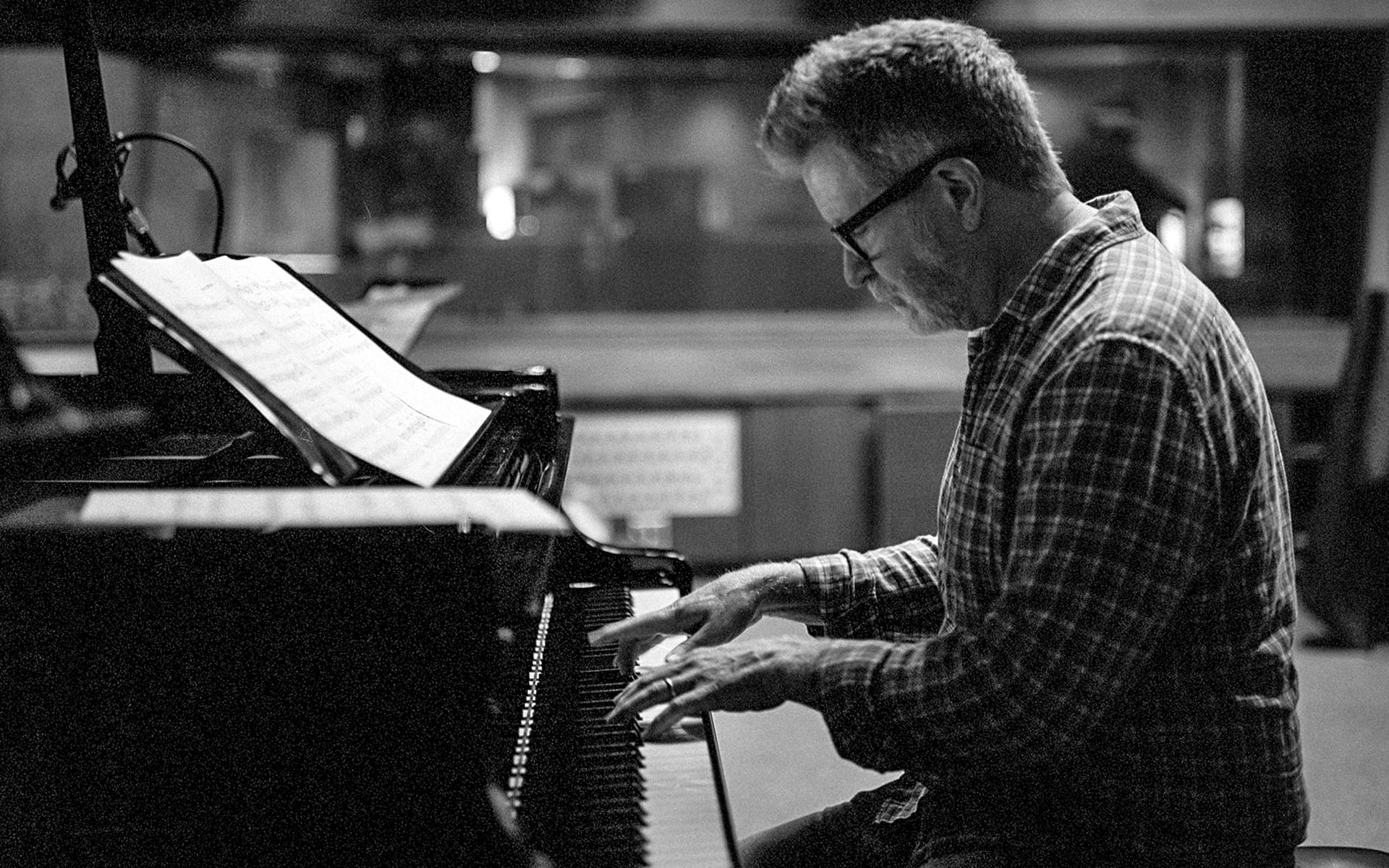
Matt Rollings has spent four decades playing keyboards on records by some of the most iconic musicians in the history of recorded music. Most of them you only need to know by their first names: Willie, Bruce, Dolly, Waylon, Reba. He has credits on more than 1,500 albums spanning rock, country, Latin, and beyond. Along the way, he has earned Grammys as a producer, played on songs with billions of streams, and built a reputation as one of Nashville’s most trusted session musicians.
Yet Rollings is quick to point out that success in the studio is about more than musical ability. Whether he’s replacing Bruce Springsteen’s placeholder piano parts, producing Willie Nelson, or helping students find their creative voice through Berklee Online’s Piano and Keyboard Techniques for Session Musicians course, he says he believes the real skill is learning how to read the room, serve the song, and adapt to whatever the moment requires.
In this Q&A, he reflects on the winding path that led him from a Phoenix honky-tonk to backing an unknown Lyle Lovett in Luxembourg, from a few semesters at Berklee to decades of Nashville sessions, and ultimately back to Berklee as an instructor, where he discovered that the lessons he’d spent a lifetime learning were worth sharing.
What was the first song you remember hearing?
Matt Rollings: The first song I remember hearing? It’s going to be a terrible ’70s pop. Like something like “Two Divided by Love.” I remember “Joy to the World.” Three Dog Night was a big part of my youth. That was the first album that my brother and I bought. I think it was called Naturally by Three Dog Night. Naturally had that hit on it, but I know I was listening to songs before then. Jim Croce was around, so “Bad, Bad Leroy Brown” was probably on the radio. It was sort of a Carole King Tapestry era. “I Feel the Earth Move” and all those were in there.
How about the first song you remember learning how to play?
Matt Rollings: I started playing the piano in 1974 when I lived in Evanston, Illinois, outside of Chicago, and the teacher they found for me was great. They taught rudiments. They taught me how to read music.
They taught me hand position. As soon as I was able, they had this whole library of popular songs, current songs that I could play. So certainly “Bad, Bad Leroy Brown” was one of the first ones that I learned how to play. I’m trying to think there was another one, a Carole King song called “Jazzman.”
Then, that teacher introduced me to Ramsey Lewis, who was like my first jazz piano guy. Ramsey Lewis had these instrumental hits back then. One of which was “Hang On Sloopy,” a huge hit. “The ‘In’ Crowd” was maybe the first jazz song that I ever played on a piano.
You talk about instrumental songs, and listening to some of your solo records, which are primarily instrumental, the titles of the songs are really interesting. On The Valentine Sessions, for instance, there’s “Chaos, Edith” which is a really evocative title. And then “Groove with a View” is the first song, but then the seventh song on the album is called “Song 1.”
Matt Rollings: The song “Groove with a View” on my Valentine Sessions record, I just came up with. I thought it was a clever name. It was the most sort of funky song on the record. It was very much a traditional jazz record, but that was sort of the funky one that was actually really designed as sort of a tribute to Ramsey Lewis, my first sort of jazz piano hero. “Song 1” is number seven on the record, but the only reason it’s called “Song 1”, is because it’s the first song that I wrote for the album, so I called it “Song 1.” I never came up with a better title. The other one, “Chaos, Edith.”
My child Luca, who’s 15 now, but maybe was 13 then, was—and probably still is—into Dungeons and Dragons, fantasy stuff, and video games. He came up with the title “Chaos Edict,”
which was very teenage and wasn’t quite right. But then I thought, hey, how about “Chaos, Edith?” So it came out of Luca’s “Chaos Edict.” I just didn’t want to name a song with the word “edict.”
When you’re working on solo work and you’re the bandleader, how does your approach differ from when you’re a session player?
Matt Rollings: So being a recording artist vs. being in the band as a session player, there’s a real difference in approach in that. Number one, as an artist, there’s a lot more at stake, which can be a detriment. As a musician, the best things happen in the studio when I check my brain at the door and when I’m able to just sink into my body and let whatever happens, happen. I think when I’m recording my own songs that I’ve written, there is just necessarily a different lens into the way that I want the songs to sound and I’m harder on myself, for sure. It was hard making that record, The Valentine Sessions. I really wanted to do an old school jazz record, so we were all literally on top of each other. There were no headphones. The engineer, David Boucher, did an incredible job because it’s really difficult to record a trio, and particularly the bass—there was a bass amp, which helped—but everybody had to play to each other. It was like a club gig or like old jazz records. That’s how you see everybody in the same room and you’re going for a performance. There was no fixing. We could cut between takes if there was a moment where it made sense, but for the most part, it’s all live and it’s warts and all. So I listen to that record now and I think, “I wish I could do that over again,” but that’s part of the magic and the sort of mystery of making a record like that. It’s just what happened in that moment. I’m not trustworthy as a judge of my own music. I’m not a good person to ask about that. Other people like it, so I’m just going to trust them.
As a musician, the best things happen in the studio, when I check my brain at the door and when I’m able to just sink into my body and let whatever happens, happen.
Do you have any idea of how many songs you have played on? Do you have a number in your head? I interviewed Nathan East once, and he estimated that he played bass on about 10,000.
Matt Rollings: I don’t know how many songs I’ve played on. I’ve played somewhere in the neighborhood of 1,500 records. So if there are 10 songs on a record, what does that equal? Is that 10,000 songs? I don’t know, but that’s the answer to that question.
You spoke of having regrets with some of your own recordings, but when you’re listening back to songs that you’ve played on, a lot of which tend to get on the radio, do you scrutinize your own parts? Do you have moments of wishing you’d done things differently?
Matt Rollings: I used to hear myself on the radio all the time, but I don’t know if I even listen to the radio anymore. Not much, but every once in a while when I do, there’s a cringe moment. But for the most part, I’ve learned—and I’m way better than I used to be at knowing this!—that I have no business judging what I played. Because no matter what, the minute I play something, five minutes later, I would have played it differently! Like, that’s just the nature of what I do. Accepting that helps me to actually kind of love those things and love those moments. I was just in a class today where they played an old song—a Lyle Lovett song that I played on from the ’90s—and there was a little part of me that was saying, “Wow, I really wouldn’t play it that way now.” But, it was many years ago, so of course I wouldn’t! That’s natural. So I think I’m more able now to just be proud that I was a part of so much music and that so many artists trusted me with their music.
It’s sort of like a historical document. It’s not meant to be judged in relation to what I might do now. That’s not even appropriate. I just can love it. I’m just grateful for the career that I’ve had and continue to have. To be on all those records is amazing.
Do you ever hear a song and think, “Wait, did I play on that?”
Matt Rollings: I have had experiences where I hear a song and then I hear the piano part, and I don’t remember playing on the record, but I know it’s me, which is fun. I’ve had that experience, and I’ve also had other people text me and say, “I just heard this song, is this you?” And I’d not recognize the song at all. Then I’ll go on Apple Music or Spotify to listen and say, “Yup, sure enough, that’s me! Now I remember.” Which is less about “Oh, I’ve done so much that I can’t remember.” It’s more about “I just don’t remember stuff because I’m getting old.” [Laughs]
Some of the artists that you’ve played with are known for their piano playing in their own right. You’ve played on recordings by Billy Joel. He’s the Piano Man! You played on one of the only recent Bruce Springsteen albums that doesn’t feature Roy Bittan. What’s your mindset when you go in to play in place of somebody, or with somebody who you may have revered since the 1970s when you were learning piano?
Matt Rollings: I’ve had a couple of opportunities to play with heroes, like iconic people. I played on a Springsteen record. I played on one song for Billy Joel, which, there’s a story to that. I played on an Eric Clapton record, and neither Springsteen nor Clapton were there. So I played piano on a bunch of Springsteen tracks, and the producer was in LA. I lived in LA, he hired me, and I basically replaced Bruce’s piano on demos that he had done that were becoming the record. So that was a really interesting thing. I love the record. It’s a really beautiful piece of work.
With Clapton, when I got hired I lived in LA, and my friend Greg Leisz, the legendary steel guitar player, we were doing a session, and he said, “Hey, you play accordion, right?” I said, “Yeah, ya know, I play at accordion.” [Laughs] And he said, “The producers here are producing Clapton’s new record. They need an accordion player. We hired this guy—and I’ve forgotten his name, but he was the top accordion session player in LA at the time—and they tried him on this stuff, and he was literally too good. They needed a crappy accordion player. They needed a kind of dumbass accordion. [Laughs] So, I went and I played with this guy, Gabe Witcher, who’s an amazing fiddle player who was in the Punch Brothers. We played these old bar tunes and we just did our thing, but Clapton wasn’t there.
The Billy Joel experience was that I was hired by a guy named Steve Lindsey. This was while Leonard Cohen was still alive. He had produced a Leonard Cohen tribute record. It might have been associated with a 60th birthday or something like that. It was in Nashville and Tony Brown, this big Nashville producer and record executive who I was very close with, was involved as a co-producer. Billy Joel was coming in to do this song, a Leonard Cohen song, but they didn’t know what Billy was going to want, so they kind of hired everybody. They hired me, and also a gentleman named Steve Nathan, who’s a great piano player, but also a really great organ player. He was a Muscle Shoals guy for a long time. We had full electric, acoustic bass, drums, all this stuff. So Billy shows up and we’re in the old RCA studio A in Nashville. It’s a beautiful big room, a classic room. I think they had a Steinway [grand piano], and I think at that point that Billy was a Steinway artist, so they had a Steinway for him. Tony said, “So, Billy, are you going to play piano?” and Billy said, “Well, it depends on the key. If the key is too high, I need to stand up to sing, and I won’t play piano. If the key is low enough, I can sit down and play piano and sing. So let’s find a key!” So I sat down at the piano and we had the chart for the song. I just started playing and messing with keys, and sure enough, “Nope! It’s too high. I’ve gotta stand!” And that’s how I got to play piano on a Billy Joel record. [Laughs] It was purely because of the key! It’s been on a bunch of records! It’s been on a greatest hits record. It’s a cool credit to have and he’s one of my heroes. I remember the Christmas I got 52nd Street on vinyl for Christmas, and I completely wore it out. It was one of my favorite albums of all time, so I’m a huge fan.
When you’re playing with people who you’ve admired for a long time, are there tips you pick up from them about the way you approach your instrument or the way you think about music? Anything that’s really stayed with you?
Matt Rollings: I learn things about being a session musician always. Almost every session I do, there’s something, some tidbit of information, sometimes it’s musical. The psychological and interpersonal experience is a huge part of making music in a studio environment. I’ve produced a lot of records, so as a producer, there’s a version of it for that. As a session player, there’s humor; there’s how humor is used. I think the more work you do in the studio, your radar continually hones and gets sharper. By radar, I mean being able to read, “What is the culture of the room?”
If it’s someone I’ve worked with a lot, I go in knowing what the culture is. If it’s a group of musicians I’ve worked with or a producer I’ve worked with a lot, I kind of know going in, “Oh, this is where we can tell these kinds of jokes, and we can do this…” And also how much input is the right amount for the musicians to give, and I’m always learning about that.
I’m always sort of trying to grow as a person and it’s a real parallel, to the extent that I have self-awareness, humility, compassion, and all those things, that translates directly into the experience of making music. I don’t know that it varies depending on the artist. I can learn the biggest thing from the most unknown artist. I think one thing I learned from working with, like, sort of superstar artists is that almost to a person, they’re just great people. I mean, they’ve lived a different life than I have and they’ve had a lot of access and privilege. But to survive and have a 30- or 40-year career at that level, there’s almost always this sort of a wisdom that accompanies that. Even if I’m not necessarily learning something new, it’s really heartening for me. It’s a great experience to be around. I didn’t play for him, but I was around Dave Matthews a bit. I’ve done a bunch of work with Willie: I’ve produced three Willie Nelson records. It’s a really great experience to demystify the fame portion of it. Then, really, you get to experience why this person is this person. It’s not just about the songs they write and the way they sing.
There’s a deep, and powerful foundational piece to it to be that kind of a person. I mean, not everybody can do that, and it eats people up. So the ones who don’t get eaten up, there’s some heavy Kung-Fu going on. And that’s nice to be around!
You spoke about reading the room and knowing what types of jokes to tell, etc. Does your approach to that change when you’re playing in different genres?
Matt Rollings: I’ve played on so many different types of records and so many different genres. I’ve played on country records, I’ve played on rock records, I’ve played on jazz records, and I don’t think genre is really a player in the experience being different, but the artist is. What the artist’s comfort level is in the studio and how much they interface with musicians. With really big artists, some of them, there’s a producer who almost acts as a firewall between the artist and the musicians. I’ve had that experience, which is fine. That’s just what that particular experience is. So you have contact with the artist, but you’re not having an intimate back-and-forth musical conversation with the artist. You’re having those conversations with the producer, and sometimes there’s even an arranger involved or a musical director. That’s sort of the exception, but generally it would be the producer.
But then other artists just want to be in it! They almost want to be in the band.
Artists like Clint Black. He’s a great example of somebody who is super hands-on. He is an artist who is also producing himself and playing guitar. I’ve been on a Clint Black record where he goes and sits down at the drums and shows the drummer a part that he’s hearing. [Laughs] So he is just one of the guys. Same with this other country guy named Steve Wariner. He’s a great musician and super accessible.
There is hierarchy, ultimately, because they’re the boss and they have the final word, but the experience of it is very relaxed and there’s a lot of feeling of equality there. But it’s super case-dependent: There’s every different combination and version of those factors on sessions. I’ve done so many of them that I’ve sort of encountered every situation, but I’m sure there’s something I’ll encounter that hasn’t happened before.
I think that part of what makes great session players, is that they call us chameleons, and one of those reasons is that we’re able to jump from genre to genre and understand, and it’s not like I’m faking it. To be a really successful session musician means I have some understanding of the genre. There’s vocabulary and language, but even more important than that, for me is that I need to know what this music is supposed to feel like. If I know what the music is supposed to feel like, and I have an idea of the vocabulary, I have an entry point. So that’s the musical version of the chameleon thing. The other side of the chameleon thing is that great session players get along: We know how to get along with people. Everybody, really. If somebody is really tough, then that just means that this is the amount of space I have, and I need to be really attentive and I need to make sure that this person knows that they have my attention, and I wait for them to introduce any humor, if humor is a part of it. And other sessions, with people I’ve worked with a long time, I can just go for it, humor-wise and sometimes that’s my role in addition to piano.
Great session players get along: We know how to get along with people. Everybody, really.
What is your go-to joke?
Matt Rollings: My go-to joke? I have a new one: There’s a woman whose husband has died and they’re having the wake for the husband. They’re in the funeral home, and she’s sitting very solitary and sadly in a chair. A gentleman very respectfully comes and sits next to her. After a moment he says, “Do you mind if I say a word?”
And the woman says, “I think that would be very nice. Thank you.”
A minute later, the man stands up and he says, “Plethora.” And then he sits down.
The woman turns to him and says “Thank you. That means ‘a lot.’”
[Laughter] You mentioned Willie Nelson earlier. Tell me a little bit about going from playing with him to producing him and how that changed your relationship.
Matt Rollings: My relationship with Willie Nelson started as a musician. I think the first time I played with Willie was on a record that was produced by a man named Matt Serletic, who was a big producer in the ’90s. It was a big record of duets. It was great! Willie is always Willie. Willie is always kind, and funny, and high, [Laughs] and just Willie. And so it was that!
Then I got to produce Willie. It was a co-production with a gentleman named Buddy Cannon, and the first co-production was for an album of Gershwin songs. It was the result of Willie being nominated for, and then receiving, the Gershwin Prize, which is a congressional honor given every year to a songwriter.
When they found out Willie was going to win the Gershwin Prize, Buddy and then Willie’s manager, Mark Rothbaum, had this idea to make a record of Gershwin. Buddy is a great producer, but he is very solid in the country world. That’s his world. So making a song is like making a record of American Songbook songs is not really in his wheelhouse. So he called me to co-produce because he knew that I could live in both of those worlds. So I definitely got to know Willie better as a result of producing him. I got to be sort of in the trenches with him, but the experience was still the same. It wasn’t a different experience, it was just more of it, of hanging with this great, super-mellow, super-positive guy who, the minute he opened his mouth to sing on one of these songs, it became a Willie Nelson song, which was spectacular to me.
I think I actually spent the most concentrated time with Willie was when there were a handful of years I toured—before the pandemic—with Alison Krauss and her band, and we did a lot of touring with Willie. We were a big part of his Outlaw Festival, a month of dates with them. And so I was around him and I’m good friends with Mickey Raphael, who’s his harmonica player, and we both had our bikes on the road, and take bike rides every day.
And Willie would always invite whoever wanted to come up onstage during his show to be a part of the gospel medley. They had headbands. You could put on a headband. [Laughs] That was the most casual everyday Willie-ing that I got to do, which was great. But again, it’s always the same. It’s always the same Willie, which is kind of amazing.
And you continued to collaborate with Willie Nelson. You’ve even won Grammys together! Tell me about that.
Matt Rollings: With Willie, I’ve co-produced three records and two of them won Grammys. The first one was the Gershwin one, Summertime: Willie Nelson Sings Gershwin. Both of them won the Best Traditional Pop Recording award. I remember when we got the nomination. Honestly, at that point, I was old enough that I felt like I probably wouldn’t ever get a Grammy like that. I was like, “That ship has probably sailed,” which was okay with me. Then we got a nomination! And even then, I didn’t really know that if it’s an “of the year” award, then the producers got Grammys. I didn’t know that! So we got the nomination, and then the Grammys happened and my wife and I didn’t have a TV at that time because we’re not big TV watchers. So it’s in 2017, maybe, I think, living in Nashville, and my wife’s folks were in town. They love to watch TV, but they love to watch the Grammys. So the day of the Grammys, my wife and I went to Target and bought a TV. We had had a TV before so we still had cable service. We just didn’t have a TV. So we got the TV hooked up. And I didn’t know that they give most of the awards away at the Premiere Ceremony, which you can watch, but it’s not on a network.
You have to go to grammy.com and stream it. We didn’t do any of that stuff. Somewhere before the main ceremony started, Ed Cherney—who was a legendary recording engineer who we lost a handful of years ago to cancer, but he recorded all of those Willie records brilliantly—he called me on the phone out of the blue and said, “Hey Matt, a truck’s going to show up at your house in a month or so with a nice package for you.”
That was how he put it. And Willie had just won the Grammy and I was going to get one! So that was that experience.
The next year, we made another record. Willie got so jazzed over winning the Grammy that he wanted to make another one. So we made one of two tributes to Sinatra records.
Sinatra was his favorite singer, and they were friends when Sinatra was alive. We made that record, which was My Way. I did all the arrangements for these records. The first one—the Gershwin album—had no orchestra. The second one, I did string arrangements and horn arrangements. One of the string arrangements was for a song called “It Was a Very Good Year,” which is a classic. There’s an amazing film of Sinatra at Capitol in the studio with Gordon Jenkins. It’s an iconic arrangement. I did another arrangement: I tried to kind of make it my own.
But anyway, I got a Grammy nomination myself for that year for that arrangement. I got to go to the Grammys. I went with my wife and didn’t win that award at the Premiere Ceremony, which is this big ceremony in the daytime where they give 90 percent of the Grammys. So it comes to the award for the Album—Best Traditional Pop Vocal Album—and I’m sitting there after not having won the Best Arrangement award. Buddy Cannon—my co-producer—texted me, because Willie’s award was coming up and he said, “If Willie wins, you’ve got to go up and accept it.” And I’m like, “What?”
We were up against Tony Bennett, among other people, but Tony had won that award at that point more than anybody: It was like 19 times he had won the Best Traditional Pop award. So I’m thinking we’re not going to win it, but maybe I’ll just write a little “thank you” list. Sure enough, we won it!
I went up there and accepted the Grammy. They specifically said at the beginning of the Premiere Ceremony, “If it’s not your Grammy, don’t accept it.”
But all the producers come up and accept the artists’ awards. So I just followed suit. Jack Antonoff would accept for sure for somebody he produced. So I said, “Alright, I’ll do it.”
Then another funny thing happened, which was that Tony Bennett was represented by Steve Macklin Feldman, which is this amazing Canadian management company based in Vancouver. They also represented Lyle Lovett, who I’ve worked a lot with. So I knew these guys. They also represent Diana Krall, who was also up for the award. I think it was a Diana and Tony duet record. I didn’t know they were there and they texted me “Congratulations.”
Afterwards, I’m like, “Oh, wow! Glad I didn’t know you guys were there.” So two Grammys! I’ll probably never get another one, but they’re fun to have around.
It’s interesting how you talk about your career, and say something like “I’ll probably never get another one” about the Grammys. But if we go back to the beginning of your professional career, within your first year or so you were working with people so iconic that they can be identified by first name only: Lyle, Waylon, Dolly …
Matt Rollings: And Conway and Loretta!
And Reba, too, right? So talk to me about that first phase of your career when you were just starting out and experiencing some of those early successes.
Matt Rollings: I moved to Nashville after having been a part of Lyle Lovett’s first record. That was a really good credit to have. He was really outside the box in Nashville, and there was a real buzz about him. To be associated with that music, it did nothing but help me, but still, I had to go through the ranks and I started by playing songwriting demos.
I was in our first house, a duplex in Donelson, just kind of squeaking by. But one day I got a call. I was on the radar at MCA, and this guy named Tony Brown—who had produced Lyle Lovett’s first couple of records—his assistant called me and she said, “John Jarvis has food poisoning and we’re cutting a Waylon record.” John Jarvis was a very successful session pianist at the time. So the assistant asked, “Are you available? Can you come and play?”
And I was like, “You got it! I’m there!”
So I went in and it was this record called A Man Called Hoss. It was Reggie Young, probably Billie Joe Walker, the drummer was either Eddie Bayers, or it could have been Larrie London, but I think it was probably Eddie Bayers. It was a heavy hitting! I was this 22-year-old who probably looked 15, coming in to play piano. That was the beginning of it, that first master session, as they call it; like master vs. a demo. So that was my first one other than Lyle. That was my first sort of independently-gotten master session.
And they just started to come in after that. It was a small enough town then that people talked about things, so my name started getting out. I remember the phone call when I lived at the same house, and this call came from a guy named Garth Fundis, who was a producer who produced a lot of those Don Williams records, and he was going to produce this guy named Keith Whitley, and he crafted a band. At that time I had been starting to play on records, so he called me and hired me to play on this Keith Whitley record, and they became sort of iconic country songs of that time. We made two records and then tragically, Keith died. He basically overdosed on alcohol. But then that same producer and studio led to most of the same band being a part of Trisha Yearwood’s first record. I played on all those first big records, and that led in turn to the Chicks, but they were the Dixie Chicks then. All of those relationships and word-of-mouth just started going from there and it really didn’t stop.
Let’s go back a little bit to when you first began playing with Lyle Lovett. That was really the entry to all of this session work and I don’t think I know the proverbial origin story there.
Matt Rollings: Oh, that’s a good one. My junior year of high school in Phoenix, I got a call on the phone from a gentleman who was a little older than me named Matt McKenzie, who is a bass player I had met as a result of an exchange program my high school had. As a freshman I got to shadow this jazz program at this community college outside of Phoenix in Mesa, Mesa Community College. They had this amazing jazz program. I spent two weeks shadowing the jazz program, sitting in with the big bands, and in the lessons and the courses, and I met this guy named Matt McKenzie.
He called me like two years later, out of the blue, and said “Matt, I play in the house band at a club called Mr. Lucky’s, and our pianist is leaving. He’s moving back to Texas, where he’s from, and we need a pianist. Do you want to come audition?”
He didn’t tell me that Mr. Lucky’s was the biggest honky-tonk in Phoenix and J. David Sloan and the Rogues, the band I was auditioning for, was the preeminent country outfit right in Phoenix.
So I went into my audition. I went to this prep school and went to a private school, and I came in with a pink button-down and topsiders to literally the biggest dance club in Phoenix. I sat in, I auditioned, I got the gig, and I worked there for two years. I learned how to play rhythm from this band. This band changed the course of my life. These guys, they taught me how to be in a rhythm section, which is why I’ve been able to work for 40 years. But during that tenure—about midway through—this random guy wandered into the club, and he was scouring the Southwest, and scouring the States in general, for American talent to book for the upcoming summer’s Schueberfouer in Luxembourg. It was this big carnival fair that they’ve had that apparently a version of the Schueberfouer has been going on since like the 1600s. This was the contemporary version. He talked to us at Mr. Lucky’s when we were on a break, and long story short, we accepted. The two gentlemen who were really the leaders of the band, they accepted. And because they accepted, I accepted. So we got this gig, and months later we got on a plane to Luxembourg and we started doing this gig.
So J. Dave Sloan and the Rogues, which is the band I was in, there was a band from Florida called Body and Soul, which was this kind of strange family show-band with horns and dancers and a little bit of a weird vibe, but very big production numbers. Then there was this guy who had been hired independently by somebody else to come and play the set changes.
It was just a guy with his acoustic guitar, and it was Lyle Lovett. He was just this Texas A&M Journalism graduate who was a singer-songwriter in Texas, and he would play all around the clubs in the Houston area and in Austin.
What would happen is that we would play our set and then Lyle would play, and then Body and Soul play the set. On the set changes, nobody would pay attention because it had been this big, loud sort of party-band atmosphere. Lyle would get up and play his sort of introspective songs on the guitar and out would come the beer mugs and the shouting. So he had been given a one-way ticket by this guy to Luxembourg, and he was honestly afraid he’d get fired and wasn’t going to be able to get home. In the meantime, the guy that hired him had been fired, so Lyle was doing a bit of floating. In about a week, he came to us to the hotel room of the leader of our band and very graciously, hat in hand, asked if we would be willing to learn a handful of his songs and back him up for his set, so he could have a little more girth to his sets.
If you’re familiar with Lyle’s music at all, in those songs were “If I Had a Boat,” “God Will,” “The Waltzing Fool.” There were all these amazing songs that were a part of that first record. So we did that and then went home. By that time I had given my notice with the band, and I was going to quit so I could go to Berklee. I was going to get back on my jazz road and go to Berklee, move to New York and be Bill Evans. That was the plan, at least. So, Lyle, in the meantime, came to Phoenix and hired us for a month that summer, that last piece before I moved to Boston. He had raised money and we recorded 18 demos, but we treated them as records.
The elder of our band was an experienced producer, so he produced them all. So I did that and then I came here to Berklee. About a year, maybe eight months to a year into my career at Berklee, I got a phone call from Lyle, and he said, “Matt, I got my publishing deal, but I also got a record deal. MCA signed me in Nashville, and they’re using 10 of our demos as my first record. They’re going to transfer them to digital.” Because digital audio was all the rage then, multi-track digital. And Lyle said, “We want to do some overdubs. I want to fly you to Nashville to play some more piano and some of the stuff you already played on.”
So that was the Lyle origin story. And that’s also the Nashville origin story for me.
What do you remember about recording with Johnny Cash? The album is called
Classic Cash, and it’s got all of the hits: “I Walk the Line,” “Ring of Fire,” “Folsom Prison Blues.” I know re-recordings get a bad rap, but as a session musician, getting to play on re-recordings of classic Johnny Cash songs with the Man in Black himself must have been pretty exciting.
Matt Rollings: I played on one Johnny Cash record, and I’m sorry to say I don’t remember it.
You’re kidding!
Matt Rollings: It was very early in the career and it was probably a day or two of recording. I was probably terrified [Laughs] but I don’t have much of a memory of that record. I honestly don’t. A Man Called Hoss, I really remember! I remember Waylon, I even remember the catering. I have a real vivid recollection, but with Johnny Cash, I don’t have anything.
I’d be remiss if I didn’t ask you about your work with Luis Fonsi!
Matt Rollings: I have played a bit for Luis Fonsi. I met some gentlemen from Miami a bunch of years ago. There was a guy named Tommy Torres, who is a big artist, but also a huge songwriter in that world. I worked for Tommy a lot in the ’90s. At first they would fly me to Miami, and there was a studio called Criterion Studios where the Bee-Gees worked. They’d take me there and I would play.
Then as budgets shrunk, they would start sending me things. There was also a guy named Lee Levin who’s a drummer, and Dan Warner, who was a great guitarist who died. They were both University of Miami graduates, and they wound up hooking up with Gloria Estefan early on. Then they became these two white guys producing all these big Latin artists. So it was Luis Fonsi, it was Ricardo Arjona—who I just produced part of a record for—and I can’t remember all the names, but I did indeed play on “Despacito,” which was sort of the biggest song of the decade. I have a little regret about that. I mean, the two producers that made that record are guys that I’ve known for a long time, and they would always send me files to work on stuff and I’d happily do it. There was a flat rate and they always paid it and it was fine. Now I’m a member of the Nashville Union, and you can do what’s called a Single Song Agreement. They make it really easy on the producer and on the artist to do a Union contract because the thing about playing on a big record, if it’s a Union contract, there’s actually a version of a royalty that musicians get every year. There are things called Special Payments Funds, and if you play on a really big record, you get a bump like every summer. [Laughs] So I played on this song without any contract, and of course, billions of streams later, I’m like, “Dang, I really should start using this Single Song Agreement!” That was kind of a fail, but I’m glad I got to be a part of it. And, if you know this little Muso.ai app that tracks musicians’ credits, that gets me in the billions of streams (that make me no money!) but I can brag about. So it’s pretty funny, but I did, and that was a massive hit.
When you’re in a session, whether you’re producing or playing, how often do you even think “This song is going to be big!” or does that not even concern you?
Matt Rollings: When I’m a part of a piece of music at the inception, whether as a player or as a producer, the idea of having a notion of it being a big song is an outdated notion. It used to be when I played on a song you just knew, like, “Oh man, this is going to be huge,” because I would play on a song and it was guaranteed that song was going to be released as a single, and it would be promoted, the artist was really big, and had a huge audience. It was definitely going to be a hit!
Going into making records now, whether as a player or a producer, my assumption is that nobody’s going to hear this. [Laughs] But with a smile! Because I’m happy for the work. I love making things in the studio. I mean, that is my playground. I grew up in recording studios, so I still love that. But I get bored: I can’t do anything always. So I go play live, and I love doing that. But as far as making records anymore, it’s a surprise to me if something really gets big. Like “Despacito,” usually if something gets big, it’s something I know I don’t have a piece of. So I’m just happy that the phone still rings.
So when doing that one, did you at least have any inclination of “Oh, this is something special”?
Matt Rollings: Doing “Despacito”? No, I didn’t know. It was that these two producers always make great records. So it was great. Even the stems they sent me to play on, it was already like, “this is great.” They’re great at what they do, so it was very professional. It was very high level, as far as there was programming, there was playing, and the scratch vocal—if it was a scratch—was great, but I don’t even think that anymore. I don’t really know what’s going to be a hit in that world. I’ve probably played on many hits in that world that I have no idea about! [Laughs] So it’s blissfully ignorant is my stance. My saying is that I’m doing my best to remain irrelevant. [Laughs] That’s my motto.
Your career has blossomed from session work to production and now teaching. Do you still try to make time to play on sessions?
Matt Rollings: I’ve transitioned out of session playing as my main gig. I do more producing and I’m also doing more teaching. I teach with Berklee Online, and I’m also a visiting scholar at Berklee in Boston. I go to Boston six times a year to teach there. That’s becoming more of a part of the equation. I’m also making my own music and writing. It’s kind of a healthy mix now.
I do get sent quite a few files, or I get asked to do quite a few remote sessions and I do some of them. This has nothing to do with ego, but more about what I feel like I can really put my heart into. The things that I say “yes” to, and that I play on, or things that I really feel like I have something to offer.
When I was coming up and really deep in the session scene and hungry, it was always a “yes.” And that was appropriate. I wanted to play on as much as I could, and I did! Now it’s less about that and it’s more about “is it a good fit?”
When did you realize that you had enough experience to teach? When did you gather enough experience?
Matt Rollings: I never really set out to teach. I really thought, “I feel like I’m a teacher now!” Berklee used to do these trips. They would come to Nashville once a year with a massive, huge group of kids.
They would spend a week in Nashville and have all these amazing experiences. They’d have producer panels, songwriter panels, musician panels. They would stage a recording session in a studio where all the students would be able to sit at a station of an instrument that they play or were interested in and put headphones on and watch a record being made in real time.
So I was a part—as a session player and a producer in Nashville—I was a part of so many of those, and I was good friends with Pat Pattison and Stephen Webber, both of whom were the spearheads, along with Clare McLeod, who is married to Pat, and they were all just the champs.
It was an amazing experience. Eventually Pat started asking me to do solo masterclasses. The first one I did was terrifying. But I did it! I did two hours in front of a huge crowd of kids, and it was really successful. I got so much positive feedback that I started finding my voice, in that way. Then I really just started to realize and own that I know stuff! [Laughs]
I don’t know everything, and I don’t know what this person or that person knows, but I know what I know, and it’s valuable. I have enough experience now. I think really, there were three or four people in my life early on that taught me without ever being asked, that mentored me, and that showed me, and changed the course of my life and my career just because of their selfless desire to help.
I realized at a certain point that I need to do that. It’s really sort of incumbent upon me to pay that back in some way. And the more I do it, the more natural it becomes. It’s not about “I’m the teacher and you’re the student.” It’s more like “I have something to share, check this out! This is cool, do you want to try this?” My approach to teaching is that I want to see the lights go on because they came on for me early on as a result of people showing me simple stuff that they just knew, but for me was earth-shaking. The experience of seeing a person’s eyes light up when they get something is priceless. It’s amazing.
It wasn’t like learning. For me it was like remembering something, and it got inside my body in a way that’s never left.
You mentioned that there were a few people who helped you learn music early on. Tell me more about your first experiences with music education.
Matt Rollings: I started taking private piano lessons when I was nine, which I think was 1973 or ’74. I was born in ’64. Anyway, it was immediate. It was just sort of waiting for me. I remember very early on I sort of knew how to play.
And then I remember—which is why jazz became my love so early—figuring out what it meant to swing. With the concept of swinging, it wasn’t like learning. For me it was like remembering something, and it got inside my body in a way that’s never left.
I continued to study. We moved away from Chicago. We were back in Connecticut, and I did more private lessons there. That sort of private education ended by the time I was in high school, but I was playing and I was really involved in my high school jazz band, and we did all these trips. Then I joined this band in Phoenix, and then I came to Berklee. I did five semesters, and then Lyle Lovett got a record deal and flew me to Nashville, and that was that! I moved to Nashville. [Laughs] I’m a little embarrassed at the lack of education I have, but I don’t think that means I haven’t always been learning, because I have always been learning. There have always been teachers. Always and still are.
What is the story you find yourself regaling people with the most? What are some of your wildest experiences?
Matt Rollings: So as far as, wild musician stories go, I’m pretty boring.
The story of meeting Lyle is a great one, but I don’t have wild stories. I wasn’t the crazy throw-shit-out-of-hotel-windows guy at all, so I don’t think I have crazy stories. I’ve got interesting stories. But I can’t tell the stories that are really crazy because people are still living! So I don’t feel like it’s fair to them. [Laughs]
If you could play keys with any artist living or dead during any period of their career, who would it be?
Matt Rollings: Wow. If I could play piano with any artist living or dead at any period in the career? That is a really interesting question that I have not pondered.
I’ve always wanted to play with James Taylor. I got one chance to play with him on a TV show.
I mean, honestly, I’ve played with so many of my wishlist people! I want to say that I’d love to play with Charlie Parker, but there’s a part of my brain that says “You’d never be able to hang with Charlie Parker. So you can’t say that one!” You know? I’m tempering these answers with “what are situations where I could actually hang?” I need to think about that. Ella Fitzgerald and Sarah Vaughan. I would love to have been in a room where Bill Evans was playing or while Duke Ellington was playing, not play with them, but just be in the room and listen, and be a part of the energy of that music.
Frank Sinatra is so known for his persona, but as a singer, he was ridiculous! He studied horn players and learned how to sing and phrase like horn players, which is amazing to me. If you listen to him, knowing that, you realize, “Oh, yeah, he really does.” Just the masters back then! Not that there aren’t masters now, but so much less is required of artists to even be professional like it used to be.
The price of admission just to get onstage was so much higher back then. Think about the Beatles. Oh my God. It’s so cliché to say, but there were four tracks and no autotune. Then what they were able to do in the studio and live was spectacular, you know? I think it’s more that I want to be an audience member for my heroes.
Of all the songs you’ve played on or produced, is there one that you feel like is your signature?
Matt Rollings: I don’t know if there’s anything I would consider my signature. I think my body of work with Lyle Lovett is very indicative of me as a musician. Lyle is always so generous with musicians and really allowed me to have my voice. A song that I’m very proud of being a part of is a song called “Stay.” This is a song I wrote with a woman named Alisan Porter. She was a winner on The Voice in season 14. She won with Christina Aguilera as her coach. I wrote this song and I produced two of her records. The first one when I lived in LA, I had a young child, she had her first child, and we wrote the song “Stay” about our kids. She sang it and she’s an incredible singer and did this amazing version of it.
Then in 2020, I made a record called Mosaic. And Mosaic was a record of collaborations between myself and a bunch of artists that I’ve been a part of their careers.
Lyle, Willie, Ramblin’ Jack Elliott, the War and Treaty, when they were just kind of coming up, and Alison Krauss. So I tried to pick songs for these artists with their approval that weren’t their songs, but that I thought would work for them, because the whole concept of Mosaic was sort of this mangling of my career that far. It was artists that I had been a part of their music and songs I had been a part of, or that were a part of my DNA, but then matching them in new ways and really reimagining the songs. “Stay” was such an iconic thing for Alisan Porter, and the only other person I could imagine ever singing it was Alison Krauss.
So we recorded “Stay” with Alison Krauss and Vince Gill sang harmony. Then my friend Kris Wilkinson wrote this beautiful string arrangement and it’s one of my favorite things I’ve ever been a part of. I think I wouldn’t change a note, which is rare! I think if you ask any musician, there’s probably always one or two where they wouldn’t change a note, but usually it’s like.
“Yeah, I’d probably do that differently.”
But this is just such a moment. It’s like a painting, almost. That comes to mind as maybe one of my all-time favorites.