





The following information on how to make money as a musician is excerpted from the Berklee Online course Creative Entrepreneurship Fundamentals, written by Maria Finkelmeier, and currently enrolling.
Revenue describes how money flows into your business, project, or creative practice. When you’re starting out as a musician or creative, you may rely on a single source of income. A singer might begin with performance fees. A composer might depend on commissions from performing ensembles. A producer might take on freelance studio work. Over time, though, long-term sustainability often comes from combining multiple revenue types.
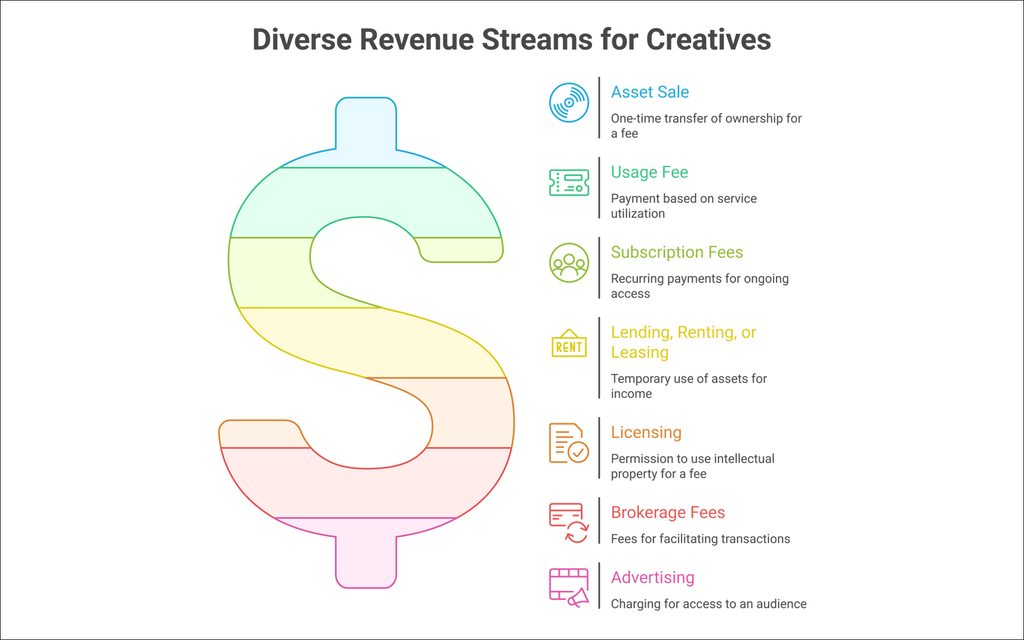
7 Types of Revenue Streams
Understanding the main categories of revenue gives you language to analyze how money enters your venture and where additional opportunities might exist. Most creative careers are not built on one stream; they are layered, adaptive, and strategic.
1. Asset Sale
An asset sale occurs when you transfer ownership of a physical or digital product to a customer in exchange for payment. In creative industries, this might include selling recordings, scores, artwork, merchandise, or downloadable files. Once the item is sold, that specific transaction is complete unless the work is reproduced, reprinted, or repackaged in a new format. Asset sales can generate strong bursts of revenue, but they depend on continued production and consistent demand.
Consider an independent artist selling vinyl records, CDs, and digital downloads through their website. Each purchase transfers ownership of that copy to the buyer. If inventory runs out, revenue pauses until more units are produced. Visual artists often operate similarly when selling original works. Once a painting is sold, the transaction ends unless prints, licensing agreements, or derivative products are created to extend its life.
2. Usage Fee
A usage fee is generated when a customer pays based on how much they use your service. This is one of the most common revenue models in creative work. Performance fees, consulting sessions, studio time, ticket sales, and workshops all fall into this category. The more you work, the more you earn. Because income is tied directly to activity, this is often considered active income and requires your time, presence, or expertise.
For example, a touring musician earns money per show. A producer charges by the hour for recording sessions. A choreographer receives a fee to stage a performance. This structure offers flexibility and clarity, but it also means revenue stops when the work stops. Managing your time and energy becomes essential under this model.
3. Subscription Fees
Subscription revenue comes from selling ongoing access rather than a one-time product or service. Instead of a single payment, customers commit to recurring payments in exchange for continued value. This model shifts your focus from individual transactions to long-term relationships and retention. It can provide more predictable income and encourage deeper engagement over time.
Imagine a songwriter offering a monthly membership that includes demos, behind-the-scenes content, and live Q&A sessions. Supporters pay a recurring fee for access. Over time, that steady stream can create stability that occasional album releases or one-off events may not provide. Subscription models reward consistency and community building.
To see how this model functions in practice, watch this brief overview of Patreon, a membership platform built around recurring supporter relationships. As you watch, notice how the structure creates predictable income while allowing creators to retain ownership and creative control. Consider how tiered access and community engagement strengthen both sustainability and connection.
4. Lending, Renting, or Leasing
In this model, you maintain ownership of an asset but allow others to use it temporarily for a fee. Because the asset is returned, it can generate revenue repeatedly. This structure works particularly well when you own high-value tools, equipment, or space that others need access to but do not want to purchase outright.
A recording studio renting its live room by the hour, a theater leasing its stage during off weeks, or an instrument maker renting high-end violins to students are all examples of this model. The asset remains yours, but it continues working across multiple clients, extending its earning potential over time.
5. Licensing
Licensing revenue is earned by granting permission to use your protected intellectual property in exchange for payment. You retain ownership while allowing others to use your work under specific terms and conditions. Licensing allows a single piece of creative work to scale beyond your direct involvement.
For example, a composer licenses a song for use in a streaming series. The production company pays a fee, and the composer keeps ownership. That same track may later be licensed for an advertisement, film, or video game. Instead of creating something new each time, the original work continues generating income across multiple contexts.
6. Brokerage Fees
Brokerage fees are earned when you facilitate transactions between other parties. In this model, your value lies in coordination, negotiation, and trusted relationships. You may not be the creator of the art itself, but you make the exchange possible.
A booking agent securing gigs for a band and taking a percentage of each contract operates this way. A creative platform that connects composers with filmmakers and earns a fee for each successful match is another example. Brokerage models depend heavily on reputation and reliability within a network.
7. Advertising
Advertising revenue is generated when brands pay for access to your audience. This model becomes viable when you have built trust, credibility, and consistent engagement with a specific group of people. Your audience’s attention becomes the asset.
For instance, a music educator with a large YouTube following might partner with an audio software company for sponsored tutorials. The company pays to reach that audience through aligned content. Advertising works best when the partnership feels authentic and maintains the trust you’ve built.
Bonus! Nonprofit Revenue
Nonprofit organizations often rely on donations, philanthropy, and grants. While these funds are not exchanged for goods or services in the traditional sense, they still require strategic planning, transparency, and measurable impact. Revenue in this model depends on mission alignment and sustained trust with supporters.
A community arts organization might receive a foundation grant to fund youth programming while also running an annual donor campaign. Supporters are investing in the organization’s purpose and outcomes rather than purchasing a product. Clear communication and accountability are essential to maintaining this revenue stream.
Most creative ventures combine multiple revenue types. An artist might earn from performances, merchandise sales, licensing, and subscriptions simultaneously. A nonprofit might balance grants, donations, sponsorships, and ticket sales. Understanding these categories gives you flexibility and foresight, allowing you to design a revenue model that supports both your mission and your sustainability.
Pricing Your Services
Pricing is the process of deciding how much to charge for your product or service. For many creatives, this can feel uncomfortable. You may worry about charging too much, not charging enough, or being judged for putting a dollar amount on something personal.
Your pricing strategy shapes sustainability, access, positioning, and perceived value. The number you choose communicates something about your work and your confidence in it.
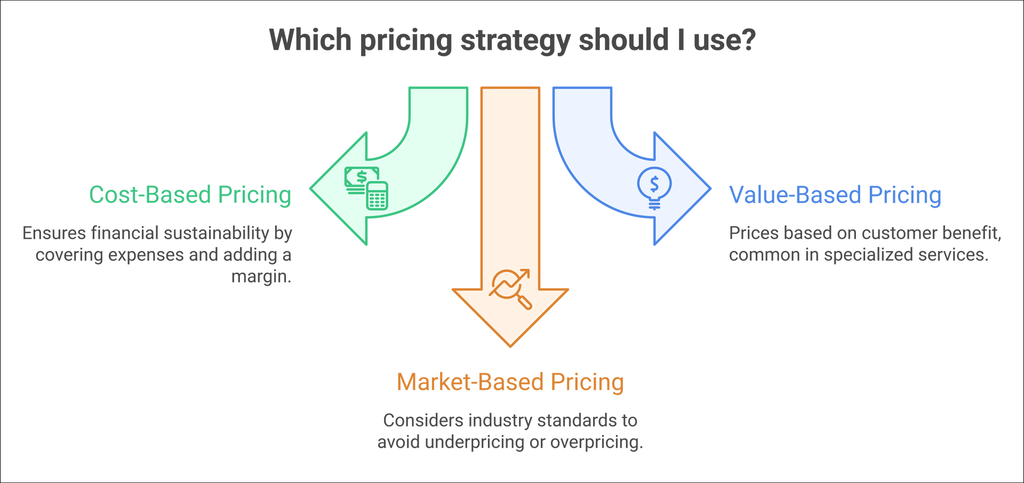
Effective pricing is not arbitrary. It is usually informed by three overlapping considerations:
- what it costs you to create and deliver the work
- what your customer is willing and able to pay
- how similar offerings are priced in the market
Most creative entrepreneurs draw from all three.
Cost-Based Pricing: Start with the Numbers
Cost-based pricing begins with your actual expenses. You calculate what it takes to produce or deliver the work, and then you add a margin to ensure your effort is financially sustainable. This method is especially helpful early on because it protects you from underpricing and unintentionally losing money.
To use this approach, you might account for:
- materials or equipment
- space rental or platform fees
- marketing costs
- travel
- preparation time
- your own labor
Value-Based Pricing: Price the Impact
Value-based pricing shifts the focus from your costs to the customers’ benefit. Instead of asking, “What did this cost me?” you ask, “What is this worth to them?” This approach is common in commissioned projects, consulting, and specialized creative services where the transformation or outcome carries significant weight.
When your work solves a meaningful problem, elevates someone’s brand, or contributes to a high-visibility project, the perceived value may extend far beyond the hours you logged.
Market-Based Pricing: Understand the Landscape
Market-based pricing looks outward. It considers how similar offerings are priced within your field and helps you understand industry expectations. This approach can prevent you from pricing yourself so low that you signal inexperience or so high that you unintentionally create barriers.
Research becomes part of your strategy. You examine peers at similar experience levels and in similar locations or niches, and then you consider how you want to position yourself in relation to them.
Once you understand how money comes in and how you price your work, the next question becomes how to officially get started. Before pursuing funding, it’s important to understand the full cost of bringing your idea to life. Careful planning helps ensure that the money you raise actually supports the project rather than disappearing into unexpected expenses.