Sean Slade helped shape the sound of ’90s alt-rock, from Boston’s Fort Apache studio to Radiohead’s breakout hit “Creep.” In this Q&A, he shares the stories, instincts, and creative risks behind those sessions, along with the lessons that continue to guide his work as a producer and educator, teaching in Berklee Online’s Music Production grad program.
As a musician, not all of your practice will be on your instrument. Some of it will be in your head, and some of it may even be on objects that just look like your instrument. We call this mental practice, and in this excerpt from Barbara LaFitte’s Practicing Techniques for Musicians course, the former principal oboist in the Boston Ballet Orchestra shares tips on how to practice your instrument when you just aren’t able to actually play your instrument.
Wondering where to take your music career? Explore the best cities for your professional life through expert advice from Berklee Online instructors and alums who currently live and work in Nashville, Los Angeles, New York City, and Miami.
Cindy Blackman became Lenny Kravitz’s drummer after a lifetime of jazz drumming. In this wide-ranging interview she discusses being visited by the spirits of the jazz greats she befriended during her time in New York City, and how she and husband Carlos Santana stay in harmony, onstage and off.
How iPads Are Revolutionizing Music Production with Portability, Affordability, and Creative Touchscreen Tools
Many people think of an iPad as a way to pass the time on a plane or train, or to keep kids occupied. But it can also be used for heavy-duty music production! With free access to GarageBand and low-cost DAWs such as Logic Pro, the iPad has evolved to be one of the only devices capable of producing high-quality music. And that functionality will only improve with the new iOS 26.
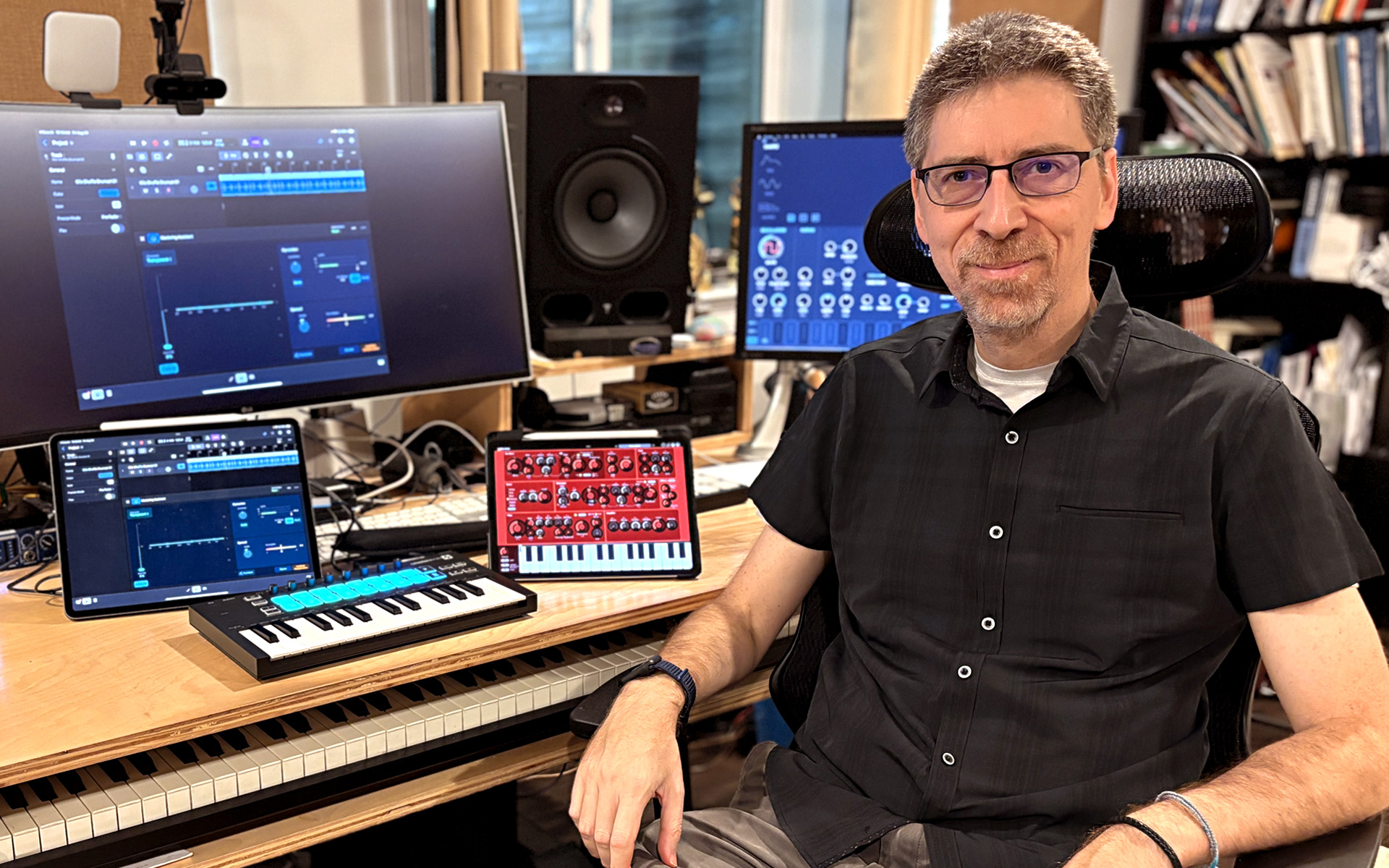
Berklee Online’s Dr. Andrea Pejrolo advocates using the iPad’s features and tools to produce any type of music, and says the tools available with the iOS update will open up a new set of possibilities.
“I’m continuously discovering things that I never thought possible, when it comes to sound design and sound creation,” says Pejrolo. “When the iPad first came out more than 10 years ago, I thought, ‘Oh, this is going to be a great device, a great tool for mobile production.’”
Now, Pejrolo shares the benefits of producing with an iPad and his thoughts on the potential that the new iOS will bring to the world of music production.
1. iOS 26 Impact on the Music Industry
With the recent unveiling of iOS 26, the iPad’s operating system is closer to that of a MacBook: users will be able to create folders, open several files, and organize them in the docks. This new system combines the features of a MacBook with the iPad’s unique touch interface, Apple Pencil, and ability to connect to a keyboard or a trackpad, facilitating the production system.
“iOS 26 is way more powerful, but also will change the way we interact with the apps, the way we can access multitasking between apps, and the way we can interact with different apps at the same time and different windows,” says Pejrolo. “iOS 26 is really improving the old audio engine. That’s going to make a big difference for any type of production tutorials creation.”
The introduction of the improved operating system and Apple’s ownership of Logic Pro have had a significant impact on the tablet’s features, with the ultimate goal of improving the production and recording process on the iPad. Now, producers with an iPad and Logic Pro can exchange projects with their studio Mac, which gives them the capability to work on the same project on different devices.
2. Portability of the iPad for Music Production
Throughout the years, production techniques have changed and evolved, from the use of heavy computers to light devices that are portable and can be taken anywhere. In music production, professionals have always used computers due to their hardware capacity. However, now iPads and iPhones have a comparable capacity to produce music using DAWs. This has shaped the way musicians approach production, going from being limited to one device, to now, having many to choose from.
“We all used our laptops, but they can be bulky and definitely expensive,” says Pejrolo. “This was a huge game-changer, because now I can start something on my iPad while traveling. If I’m on a plane and I want to put down some ideas, I can just do it there, come home, open that same file in my Mac, and keep working.”
iPads have allowed musicians and producers to work on ideas even when they do not have access to a computer or even the internet, making it easier for them to record ideas whenever inspiration strikes, which can often be at inconvenient places or times. Musicians and producers no longer need fancy equipment or to be physically in a studio to record their music.
“This new platform allows us to use the iPad as an extension of our studio, and express our creativity wherever we are,” says Pejrolo.
3. Unique Music Production Features of the iPad
Now, iPads have access to almost the same tools and production techniques as computers, making it possible to produce high-quality music in either. At the moment, there are even some features available on iPads that are not on computers, such as the touch screen interaction.
“The iPad offers unique features such as the option to use the built-in accelerometer to change a parameter of a sound in real time. I can change the sound by moving my iPad up and down, or I can draw my automation with an Apple Pencil. This tends to be a way of interacting with our music that is not available on the Mac.”
4. Accessibility and Affordability
The iPad has also been evolving to include more free or low-cost features and apps. iPad models such as the iPad Air are more affordable than computers and their apps are less expensive as well. On iPads, Logic Pro is subscription-based, where users pay around $5 a month, making it only $50 a year, whereas on the MacBook, it can cost up to $200.
“Plug-ins are more affordable on an iPad than on a Mac. There are some amazing apps and synthesizers capable of creating original sounds from scratch, giving you the exciting option to be creative at a very affordable price,” says Pejrolo.
This difference in price has made music production more accessible since creatives don’t need to invest in high-cost equipment to produce. The iPad itself is also way cheaper—ranging between $350-$1,500—depending on the model. This is why Pejrolo encourages everyone to give it a try, whether it is for career purposes or just for fun.
Pejrolo says music production on the iPad is for learners of all levels and ages, whether they’re pursuing music production professionally or as a hobby.
“I see younger students, but I also see professionals that are like ‘Oh whoa, I had an iPad for years sitting on my desk, and I just use it to watch Netflix, and I never thought that I could actually use it for my production,’” Pejrolo says.
5. The Interactive Feel of the iPad
Producers typically use a computer for their creative work; however, since the iPad is gaining traction in the industry, not everyone is aware of the benefits that it can bring to music production. Pejrolo mentions that there are things that producers can do better with the touch interface of the iPad, which he noticed has made a great difference in the music he produces. Also, if producers do feel more comfortable working with a mouse and a keyboard, they can easily use them with their iPad.
“I love the feeling of the touch screen because, in my opinion, it brings us closer to our music, especially when you mix or work on music editing,” says Pejrolo. “Removing extra devices between you and your music makes the creative work more personal.”
Pejrolo says he is encouraged by the advancement of home recording technology, but people do not often think of the iPad as an alternative to a big studio setup.
“Once you try it, you’re going to discover a really amazing world,” says Pejrolo. “Writing and sequencing music with your hands really breaks that barrier between you and your art.”