Sean Slade helped shape the sound of ’90s alt-rock, from Boston’s Fort Apache studio to Radiohead’s breakout hit “Creep.” In this Q&A, he shares the stories, instincts, and creative risks behind those sessions, along with the lessons that continue to guide his work as a producer and educator, teaching in Berklee Online’s Music Production grad program.
As a musician, not all of your practice will be on your instrument. Some of it will be in your head, and some of it may even be on objects that just look like your instrument. We call this mental practice, and in this excerpt from Barbara LaFitte’s Practicing Techniques for Musicians course, the former principal oboist in the Boston Ballet Orchestra shares tips on how to practice your instrument when you just aren’t able to actually play your instrument.
Wondering where to take your music career? Explore the best cities for your professional life through expert advice from Berklee Online instructors and alums who currently live and work in Nashville, Los Angeles, New York City, and Miami.
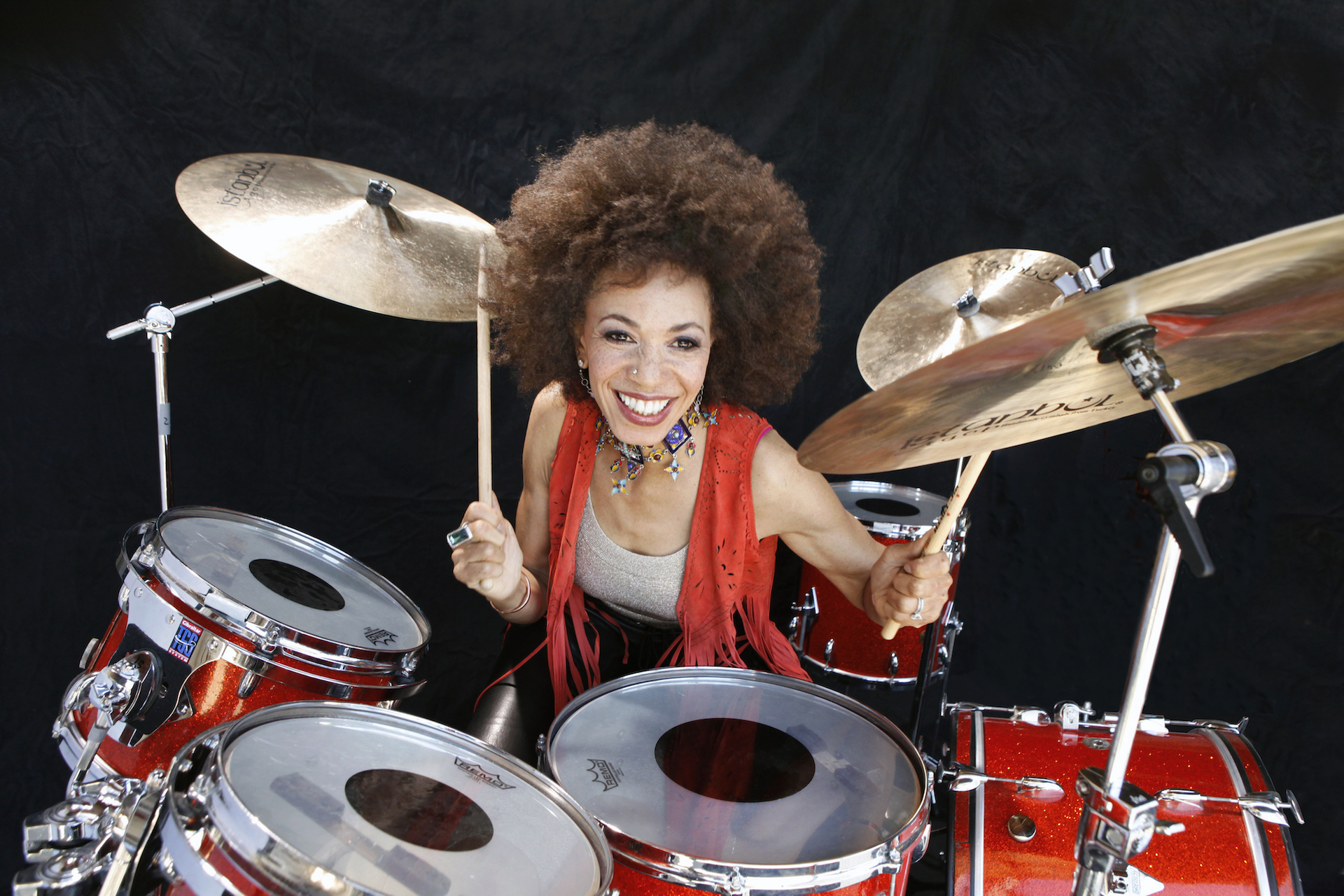
Cindy Blackman became Lenny Kravitz’s drummer after a lifetime of jazz drumming. In this wide-ranging interview she discusses being visited by the spirits of the jazz greats she befriended during her time in New York City, and how she and husband Carlos Santana stay in harmony, onstage and off.
Creating a Song the Whole Stadium Can Sing Is the Goooooaaaaall
Throughout the nearly 100-year history of the World Cup, songwriters and musicians have made full stadiums sing along to their anthems, transforming a sports experience into a musical one as well. Over the years, artists from across the globe—including Shakira, Alicia Keys, Ricky Martin, K’naan, Jennifer Lopez, Jung Kook, Maluma, and Nicki Minaj—have contributed memorable songs to the World Cup, helping turn the tournament into a shared musical experience as well as a sporting one.
In the 2026 World Cup, which runs from June 11 through July 19, many artists from diverse countries took their shots at writing a song for the event, but only a few were selected by FIFA. With the 100th anniversary of the first World Cup taking place in 2030, we offer this advice from Berklee Online instructors for emerging musicians and songwriters who might want to start writing the next World Cup anthem.
“When you’re thinking about an anthem, it’s gotta be uplifting, empowering, unifying, and people need to feel a sense of belonging,” says Rodney Alejandro, who teaches Topline and Vocal Production at Berklee Online. “When we think of anthems, we think of big stadiums, we think of a lot of people. What’s the energy that moves a stadium? It’s gonna be rhythm and voices.”
Writing and Producing an Anthem
The process of writing an anthem for an event like the World Cup requires a bigger focus on themes that can easily appeal to greater audiences. This is why songwriters and producers should take a different approach than when writing a regular song. Instead of thinking about the sounds and arrangements that are significant to a specific artist and appealing to their fanbase demographics, songwriters should begin to think about inspiring a massive number of people with widely different musical tastes.
“You have to create a world that a majority of people can recognize,” says Alejandro when speaking to the difference in producing a song for an artist vs. an anthem that will be globally accepted. “You’re trying to make sure the entire world can relate to the sounds. You come back to rhythm, drums, typically rock guitar because that leads into the power, and really strong-sounding choir voices, something that sounds like a giant crowd.”
Katie Day, who teaches Writing and Producing Advertising Music at Berklee Online, highlights the importance of remaining genuine to your work, even though the reason for this song is for a universal event rather than a personal expression. Audiences will be more likely to connect to your lyrics if they come from a feeling of passion and excitement that is at once both universal and personal.
“I do think the level of passion and authenticity behind it does make a difference. If you are genuinely excited about an event, team, or purpose, and you can translate that excitement musically, it will cut through the noise and connect with an audience,” says Day, who has some experience with this kind of songwriting. She wrote the Chicago Cubs victory song for the World Series in 2016
Anthems that are recognized worldwide generally consist of a rhythm that is easy to replicate and simple lyrics that foster a sense of community and can be sung by everyone, regardless of the language that they speak. The song “We Are One (Ole Ola)” performed by Pitbull, Jennifer Lopez, and Claudia Leite is a great example.
One night, watch the world unite / Two sides, one fight, and a million eyes … and ears!
Even though the song is mainly in English and has some lines in Spanish and Portuguese, its chorus and the repetition of “Ole, Ole, Ola” make it an easy song to sing and remember. Also, its fast-paced beat is energizing and uplifting, which appeals to the passion, pride, and positivity of people cheering on their team.
“If you’re writing an anthem, a great test is to play it for your friends; if they can’t remember or chant back the chorus after one listen, you might want to tweak it,” says Ben Camp, who has written several Berklee Online songwriting courses, including Songs Unmasked, AI for Songwriters, and the Songwriting Capstone.
Day says researching the event you are writing about can help you better understand what kind of music this particular audience wants to hear. When writing an anthem for the World Cup, this means putting yourself in the shoes of soccer fans or, as most of the world would call them, football fans.
“I think it’s important to get into a state of mind where you’re genuinely feeling the things you’re writing about,” she says. “Maybe you need to watch some sports montages on YouTube or do a deep dive into the history of the specific event your song is intended for. Get excited. Feel the unity that is created with other people who are excited.”
Another songwriting strategy is having a balance between the simple and the unexpected. Camp teaches students the importance of repetition and variation when writing memorable choruses, while at the same time relating the concepts that constitute an anthem to their own lives. By doing this, the song sounds genuine and is still relatable to you and the public.
“Don’t overthink it,” says Camp. “If you instinctively chanted it out while strumming your guitar, and didn’t use a thesaurus or rhyme finder to write it, that means it’s pretty accessible to you. That can translate to others!”
“As humans, we ascribe certain sonic characteristics to certain feelings. Depending on our cultural upbringing, we might connect emotions like nostalgia and intimacy to ‘lo-fi’ sounds,” he says. “We’ve learned that the sound of an epic stadium feel is associated with many, many, very different humans belting a simple message in a very big open space. In order to connect to these emotions, we analyze those sonic characteristics and recreate and reimagine them in the controlled environment of a studio by recording as many people as possible, overdubbing them many times, singing close and far away from the microphone.”
Gonzalez Müller knows a thing or two about making a group of people sounding like a very large group of people. In 2004, he produced the official anthem for Venezuela’s National Soccer team, La Vinotinto. This anthem was meant to represent Venezuela’s soccer team in international matches such as the World Cup, COMEBOL, and Copa America.
“¡Viva! ¡Que viva! ¡La Vinotinto que viva! ¡Que viva!” (Long live La Vinotinto!) is something thousands of people can chant together in a stadium.
Navigating Cultural Identities
Another key to making a great anthem is to find the middle ground between including cultural aspects and universal components. Since a World Cup anthem is meant to reach listeners from many cultures, songwriters must balance cultural specificity with broad appeal.
Reaching a balance is not an easy task, which is why many artists add sounds and lyrics that incorporate the culture where the World Cup is being held as well as having aspects that can make the whole world sing.
“There’s no secret that guarantees success, but if I’m writing for a multilingual market, I’ll try to keep any English words as simple and accessible as possible. Think ‘You’re amazing’ or ‘Life is the best,’” says Camp.
Shakira’s “Waka Waka (This Time for Africa),” written for the 2010 FIFA World Cup in South Africa, draws on African musical and cultural influences, including the Cameroonian expression “waka waka,” meaning “walk” or “march,” which has roots in military usage. The songwriters combine these cultural elements with accessible rhythms and melodies that encourage audiences around the world to sing along.
“People are raising their expectations / Go on and feed ‘em, this is your moment, no hesitations”
“What they ended up doing was taking the elements that were enough to identify it as the cultural piece and bridge it with that piece that is way more universal,” says Alejandro when talking about the production of this song. “So the idea is: you get enough of what is pop—meaning what is mass market appeal—with the flourishes of what might be really cultural and folkloric.”
Ben Zakharenko and Dayvin, who are Berklee students, arranged and produced the Boston Theme of the FIFA World Cup Anthem, which incorporates melodies from the official World Cup anthem and makes musical allusions to Boston’s history and culture.
“You can hear some of the symphony pieces because Boston is known for its symphony,” says Alejandro. “You’re gonna hear some hip-hop because some famous hip-hop and R&B artists come from Boston. There’s a little water droplet that reminds you of the harbor.”
Cultural references can be subtle, such as the use of native instruments, or more explicit, through language, lyrics, and historical references. Despite the path songwriters and producers choose, it is important to honor these cultural aspects and to carefully choose what will best appeal to the majority of the public.
Optimizing International Collaborations
Most of the songs written for the World Cup are collaborations between artists that perhaps do not even release music within the same genre. While it may at first be challenging to collaborate with an artist who has a different sound than yours, it emphasizes the theme of unity you are trying to incorporate in your song.
“Collaborations are awesome. Collaborations are hard. My humble suggestion, which seems to work 97 percent of the time, is to have the entire team agree on the purpose of their endeavor, as well as the realistic ambitions for the ultimate production,” says Gonzalez Müller.
Similarly, Alejandro advises his students to be open-minded towards others’ input in collaborative situations and to anticipate that their ideas might be changed for the purposes of the song.
“The people engaged have to be willing not only to contribute their best, but to allow what they can contribute to be modified so that others can appreciate it as well,” he says. “It really takes the people coming together and seeing how their strengths can work together to get to the final anthemic piece.”
Collaborate Like a Champion
Like most Berklee Online courses, Rodney Alejandro teaches students from different parts of the world in his Topline and Vocal Production course, which leads to some interesting remote collaborations. The following three main pieces of advice allow students to better work with other musicians in remote locations:
1.
First and foremost, make sure everyone’s on the same page with the baseline technological format, meaning that everyone’s working at the same sample rate.
2.
Everybody understands what the form of the song is going to be and what the best place to start is, according to what they feel in their cultural expression.
3.
Someone has to be the final decision-maker, because not everybody can be the final decision-maker. This person oversees all the technical requirements, the arrangement, journey, and expression of the songs, and ensures that everyone can contribute meaningfully.
By knowing how to collaborate with different artists and using the tools needed to write a great anthem, songwriters and producers are better equipped to create music that is capable of bringing people together on a global scale.
Writing a World Cup anthem requires more than a memorable melody. It calls for the ability to balance cultural identity with universal appeal, collaborate across creative boundaries, and create a song that millions of people can see themselves in. Whether you’re writing for a global event or your own local community, those same skills can help turn a song into something larger than itself.