Sean Slade helped shape the sound of ’90s alt-rock, from Boston’s Fort Apache studio to Radiohead’s breakout hit “Creep.” In this Q&A, he shares the stories, instincts, and creative risks behind those sessions, along with the lessons that continue to guide his work as a producer and educator, teaching in Berklee Online’s Music Production grad program.
As a musician, not all of your practice will be on your instrument. Some of it will be in your head, and some of it may even be on objects that just look like your instrument. We call this mental practice, and in this excerpt from Barbara LaFitte’s Practicing Techniques for Musicians course, the former principal oboist in the Boston Ballet Orchestra shares tips on how to practice your instrument when you just aren’t able to actually play your instrument.
Wondering where to take your music career? Explore the best cities for your professional life through expert advice from Berklee Online instructors and alums who currently live and work in Nashville, Los Angeles, New York City, and Miami.
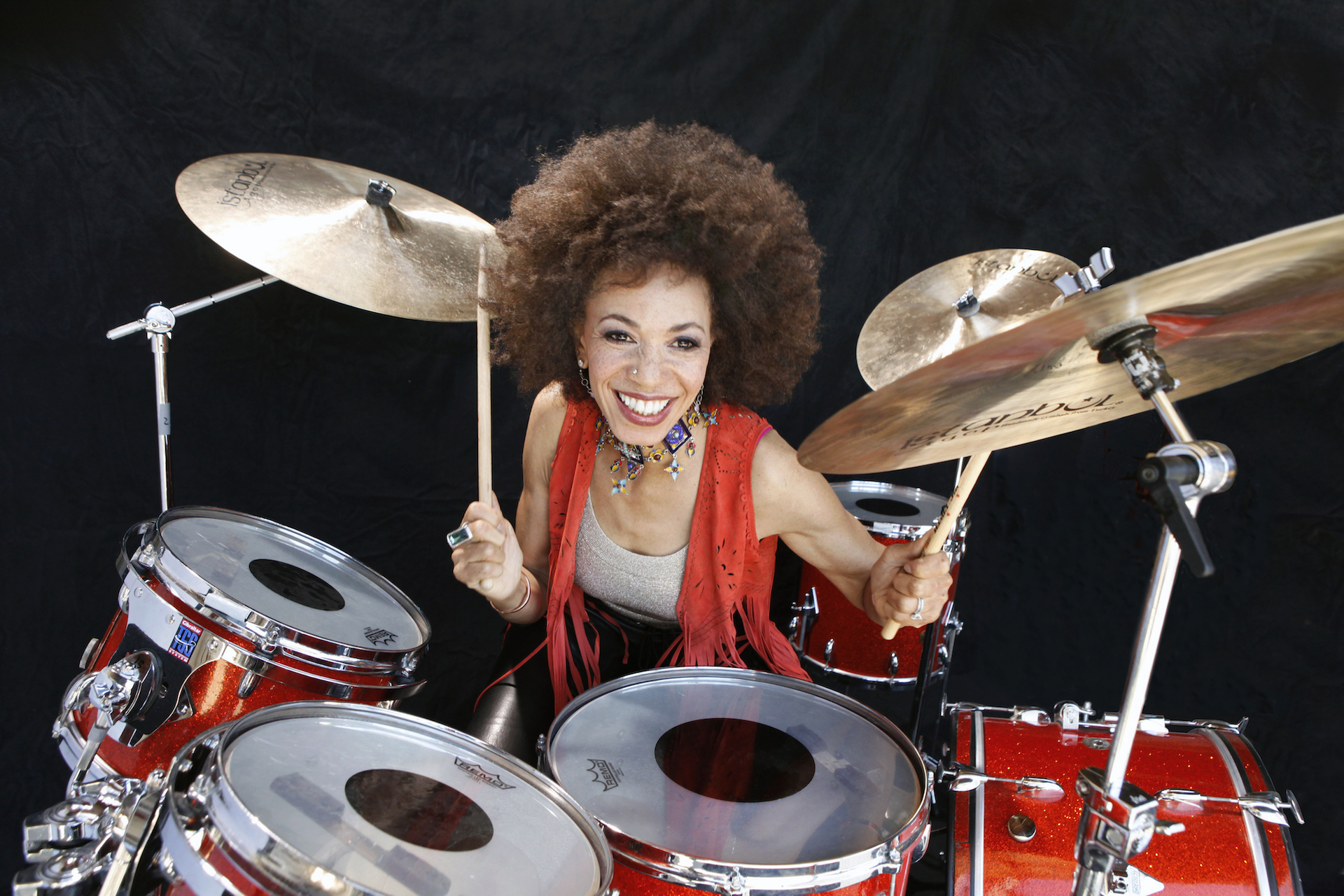
Cindy Blackman became Lenny Kravitz’s drummer after a lifetime of jazz drumming. In this wide-ranging interview she discusses being visited by the spirits of the jazz greats she befriended during her time in New York City, and how she and husband Carlos Santana stay in harmony, onstage and off.
Growing up amid War, Traveling the World, and Studying ‘The Music of the People,’ Helped Christiane Karam Find Her Voice
Growing up in Lebanon during the country’s civil war, Christiane Karam says music was “a safe space.”
But she says she also had to reconcile with how the beauty she was hearing could coexist with the violence she was seeing. That question has followed Karam throughout her life, leading her to seek connection wherever she could find it: improvising with Bobby McFerrin, singing with grandmothers in villages, and even stepping into the boxing ring. Some of those experiences eventually found their way into the Berklee Online course Vocal Styles from Around the World, where Karam shares the musical traditions she has spent much of her life exploring.
In this Q&A, Karam discusses how finding her own voice taught her to help others find theirs.
What’s the first song you remember hearing?
Christiane Karam: I remember music playing a really big role in my life from when I was very little. I remember coming home having learned a nursery rhyme in French and singing it over and over again while skipping around. It’s one of my first memories of just complete childlike fun. The song was the story of a man who loses the tip of his nose and an airplane comes by and retrieves it. I remember I cried every time because I thought it was so sad.
What are you listening to these days? We can skip this question if it’s still the French nursery rhymes.
Christiane Karam: I have so many diverse interests. I’m so in love with so many different cultures in the world, different textures, different sounds, different scales, different ways to understand rhythm, and the ways to understand ritual. This is why I spent such a big part of my life traveling and getting to know what I affectionately call “the music of the people.”
I love going to villages. I love singing with grandmothers, understanding how communities celebrate and mourn. It is essentially that work that inspired the Vocal Styles from Around the World class because to me, it’s a testimony to the richness and just the exquisite tapestry that is our world and what music started out as.
And I feel like we’ve isolated ourselves from that. We focus so much more on the virtuosic aspects at times or the industy aspects at times. We forget that music started out just with the voice, with the body, and with rhythm, as ways to just celebrate our humanity and to come together in times of joy and in times of sorrow.
I found that everywhere in the world there’s that shared aspect of what music does and the role it plays in communities. Sometimes it’s more exuberant, like if you go to Cuba or to Latin America, you’ll find exuberance even in sorrow. If you go more east, you will find just more nostalgic sounds and more melancholy even in joy.
It’s very interesting how that varies, but underneath it all, there’s this beautiful and poignant truth that binds us all in the most beautiful ways. My sense is that we’ve come to forget that a little too much nowadays, and as artists, I feel like it’s our responsibility to remember that and to have the courage to embody that, give others permission to do the same and connect.
Because it is my deepest belief that so much more connects us than divides us, and I feel that that is a lived-in truth in that course.
I like that you said that about emotions and honesty over virtuosity. What do you look for when you’re thinking of the music that really moves you?
Christiane Karam: I think I’m really moved by courage, integrity, and soulfulness. I find that the craft of music is primordial in so many ways. But to me, it’s at the service of what it is that we’re saying. The embodiment of why we’re here and what it is that we’re getting across.
I find that when craft supersedes the messaging, it has much less impact. So while I find myself very impressed or delighted by virtuosic aspects of music—I find myself in awe of so much of it—nothing moves me as much as truth, authenticity, or courage. It’s the courage to be present to whatever emotions and experiences we are going through as humans. Then when that is transmuted to art, that is to me what I live for, because that is to me what has the most impact.
And again, this is something that we find in the humble music of every tradition, because these are qualities that are necessary, and that have been necessary for the survival of our species. If we look at so many different peoples around the world and the role that music had, that songs had, and that the oral tradition had in ensuring their survival, there’s nothing more humbling. And there’s something about those traditions, that when you hear the music, it moves you to the bone. It transforms you because it’s coming from a place of absolute lived experience. There’s nothing affected about it. There’s nothing casual about it.
You’ve traveled extensively, making field recordings and spending time with musicians and elders from different cultures. What keeps drawing you to that type of work?
Christiane Karam: I have so many voice memos and recordings. To me it was so much more of a call to go within, for myself, and really understand my own roots and my own story of origin. I come from different cultural backgrounds: I grew up in a civil war, so a lot of that just really collided in me at a very young age and created just a very fragmented sense of self, and music was always a place where it would make sense. Because what connected everything was something that went beyond what seemed conflictual. When I go and sit with somebody, with elders, to me I’m receiving medicine when they sing or when they play a drum or when they tell a story. Personally, I feel their ancestors speaking through them, and I feel like each of us has that power to summon that in us. And by doing so, we have the agency to choose what we bring forward and what we choose to perpetuate. There are aspects of violence and discord that I believe—with the right mindset and with the right work—we can transcend. Music is such an incredibly valuable tool to do that with.
You mentioned growing up during a civil war, and you’ve said that genocide is in your DNA. Talk about when you first found a connection between music and healing.
Christiane Karam: I’m Lebanese and I’m part Armenian. My mother’s side of the family survived the Armenian genocide. So that was already in our lineage and in our DNA. There was the Lebanese Civil War, which lasted throughout all of my childhood and youth. All of that created a lot of discord and a lot of disconnect of truths that seemingly couldn’t be held together. Music, growing up, was a safe space. It was very safe. It was very soothing. It brought a lot of comfort. I was in awe of the beauty of it. At the same time, there was this intense disconnect within me of how it could be that in our world, there is so much beauty and so much violence?
And how could so much beauty coexist with so many atrocities? There were a lot of these two perceptions in my lived reality that created a lot of alienation inside me. It took a very long time and a lot of work—many cycles of doing that work—until I got to a place where I understood that it is the duality of our world, and there is the possibility of transcending rage and violence with media like music and art. They allow us to drop deeper and connect with parts of us that are wiser than the conflicts at hand.
In this sense, as artists, I find that we have a tremendous responsibility in finding that voice in us so that we may inspire others to do the same. I have a pet peeve with this very “Kumbaya” idea of music and peace. This idea that, “oh, if we play music together, then we forget that we don’t need war…” Yes and no, because music is just a shortcut and putting us all in a place where we are each more connected to ourselves so that we can allow ourselves to be more connected to others. So from that place, difficult conversations can happen. We can move the conflict forward and transmute it. So it’s not easy work and it’s not instant. I find that what music gives us, is the instant possibility of dropping to a more profound place in ourselves, where we are able to recognize ourselves and others as human, and then begin to work from there.
There’s a part in your book, Of Broken Pieces and Light Ahead, where you wrote, “I kept singing my shaky voice into my truth until it could roar.” I’d love to know what the moment was where you first felt that.
Christiane Karam: For the longest time, it was very hard for me to really sing because I was terrified that the dams would break open. I felt like I had internalized so much grief that it felt safer to just keep that part of myself shut down. I distinctly remember a concert, it was years ago, but I remember the shift where I went from just making sound to tapping into the most primal part of me.
It was really intense and really moving, but I knew at that moment that I had turned the corner. If you listen to my last album, I dedicate it to Beirut, who has been through so much. There was one piece, I remember we recorded it during Covid in New York, when I let myself be present, it was in the immediate aftermath of that devastating explosion in Beirut. We could all only do it a couple of takes because it was so powerful, primal, and intense. We were all in tears. It was a moment of reckoning. It wasn’t a piece you could rehearse or that you could redo.
That moment when the floodgates opened, is that something you’re able to teach? Can that be taught?
Christiane Karam: Absolutely. I think I do a lot of work. In general, a lot of what I do has been onstage and offstage. So I really believe in leading by example. I wouldn’t allow myself to be in a position to even speak to this had I not gotten myself through that process, both onstage and as a speaker. I also went through the exact same process as a boxer, where I remember distinctly the first moment that I was finally able to punch back, which was a triumph for me.
I’ve seen videos of you boxing. What drew you to that?
It was yet another layer of what we’re talking about, of me really claiming my voice and not staying passive out of fear of that loss of control.
I believe that we can’t lead anyone where we haven’t been. By the same token, once we’ve done the work ourselves, once we’ve been there, we can recognize that in others.
It can be in person, it can be remote, it can be onstage, and it can be offstage. But there’s something about your presence that summons that in others. Those who are far from that and really not ready to embark on their journey will not want to. Those who are finding the courage to get started will be drawn to it. Then there are so many beautiful ways of doing that with the voice, with the words, with presence, with holding space, which is a lot of what happens at Berklee Online, be it in the private lessons or in the Vocal Styles from Around the World class. There’s a lot of holding space for profound questions and profound realizations, that come from listening to these old traditions, that come from pondering these parts in ourselves that need work.
When you see so many masters who have engaged before us and what they were able to do in their own communities, in their own societies, for their own people, it’s such a beautiful, rewarding place of allowing somebody else to have it. It becomes such fertile ground for then giving yourself permission to do the same.
There was a part in the Science and Song documentary where you’re singing with Bobby McFerrin, expressing yourself musically in a way that reflects your musical upbringing. Is that common in your life, to do that sort of culture-bridging? Or was that one moment that you could point to as a real breakthrough moment?
Christiane Karam: I’ve had the privilege of working with a lot of incredible musicians from different cultures over the course of my career. I had the immense pleasure and privilege of working with Bobby McFerrin, for many years as well in that setting of vocal improvisation with people from all around the world.
We got to experiment a lot with what it meant to bridge cultures; what was possible when we understood certain elements, but not all elements from the cultures that were present. It was a beautiful, very humbling experience, which I encountered in my own workshops as well. It calls us to find the common denominator. Without the common denominator, we can’t connect.
So it’s a beautiful exercise in really letting go, or our voice wanting to be prominent to the service of the beauty that we can all create together. That can only happen if we can get a sense of where every person is and how every person relates to the music. This is what makes improvisations collective and successful. It is how much we’re listening and how much we’re really connecting. If the only thing we can care about—whether consciously or subconsciously—in a conversation is letting our piece out, then we’re not listening. But if we want to take in what other people are saying and only speak when we know that we can contribute, that makes for a much more constructive and compelling conversation.
It’s exactly the same thing in music. This is something I ask my students in the Vocal Styles from Around the World class; to think about when they listen to all these different traditions. I think I managed to pack 150 or so traditions in one term. We talk a lot about appropriation in that class. We talk about what it means to master a tradition.
Are we going to master any of these traditions in one term? Absolutely not. I tell them that my goal is for them to fall in love with one thing. If they can take the term and encounter all that, all these traditions, and then fall in love with one song, one sound, one artist, one culture, then it’s a win.
Because then they can be obsessed with it. They’re going to want to travel there, and it will advance them on their path of discovering who they are as artists.
I’ve had the incredible privilege of working with people that changed my life, like the one and only Bobby McFerrin. I consider him one of my greatest mentors. He informed some of this class. We circle back to his approach on improvisation towards the end of the course.
Last week, somebody put in one of their assignments: “this class is a dream come true.” This is the kind of feedback I get a lot. It means a lot to me, because it is truly the class I wished was there when I was wanting to discover different cultures from around the world.