From an F7 barre chord at age 12 to becoming a Berklee Online instructor, Amanda Monaco's musical education has taken some unexpected turns, including a Mafia christening and a Chili’s commercial. She reflects on the experiences that shaped her playing and why hard work matters more than talent.
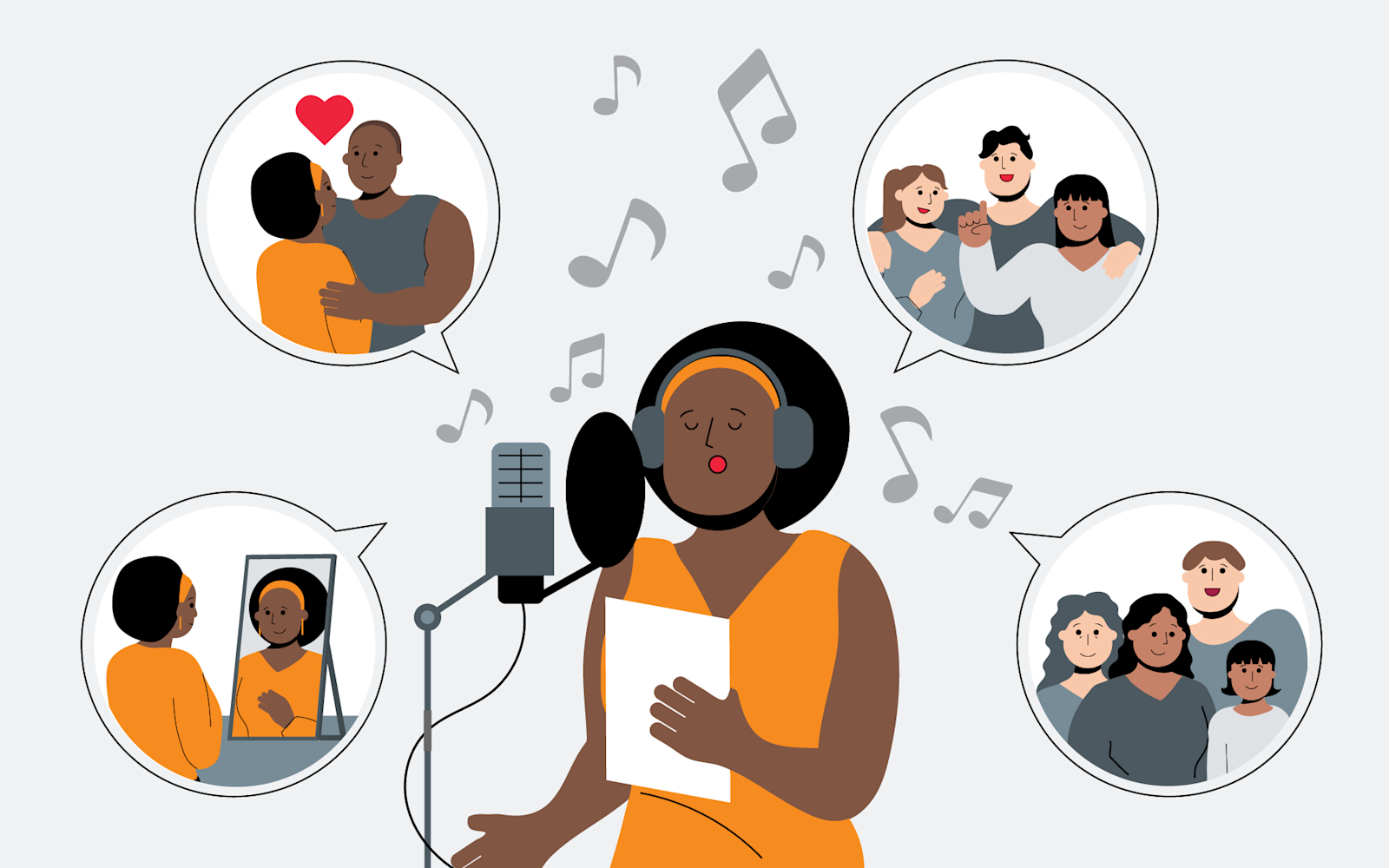
Who is a song really talking to? Discover how direct address shapes intimacy, tension, and emotional connection in lyrics in this course excerpt from Lyric Writing 2, featuring examples from Dolly Parton, Billie Eilish, and more.
Wondering where to take your music career? Explore the best cities for your professional life through expert advice from Berklee Online instructors and alums who currently live and work in Nashville, Los Angeles, New York City, and Miami.
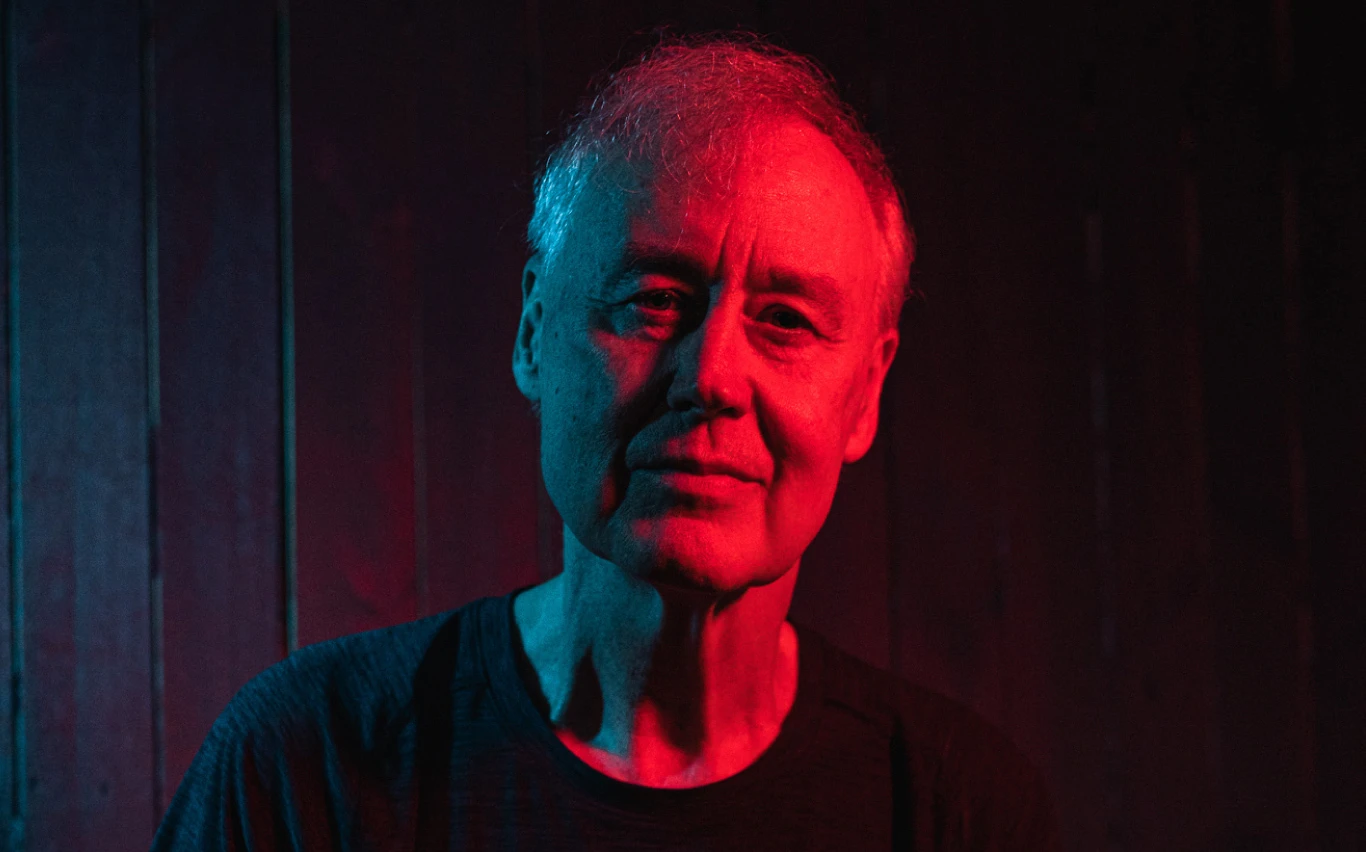
Bruce Hornsby discusses his humble start in a Grateful Dead cover band, his mega breakthrough with “The Way It Is,” and his recent indie rock resurgence via his collaborations with members of Bon Iver. And yes, he also discusses how surreal it was to play 100+ shows with the real Grateful Dead!
The Emmy-nominated Composer and Music Director for Sarah McLachlan on Why He Went Back to School
The sheer range of Vincent Jones’s experience in the music industry could lead you to believe that several people have been operating under the same name. But make no mistake: the Vincent Jones who got his start in the late ’80s with the platinum-selling Canadian band Grapes of Wrath is the same Vincent Jones who co-wrote the theme for Parks and Recreation and has composed for several successful series. He’s also the same Vincent Jones who serves as musical director for Sarah McLachlan and has played keyboards for the likes of Morrissey and Depeche Mode’s Dave Gahan. And it’s the same Vincent Jones who enrolled in a couple of Berklee Online courses last year.
“I never had any formal education,” he says. “I quit college and joined a band that had a record deal when I was 19. And so I was signed to Capitol Records and did that until I was in my mid-20s, and then, life happened, but I’d always wanted to go back and study, and then I looked for quite a few years at Berklee Online. I wanted to take something heady and challenge myself.”
Those heady courses included Orchestration 1 and 2, which gave even a seasoned composer like Jones plenty to wrestle with.
“It forced me to not only program everything, but to actually understand and transcribe,” says Jones. “To have it checked and proofed so that actual musicians could read it, and to be able to do it without having an orchestrator look at it, it was amazing. I mean, I learned so much.”
By the time he enrolled at Berklee Online, Jones had already earned an Emmy nomination and ASCAP awards. In addition to Parks and Recreation, his main title credits include Up All Night on NBC and We Are the Champions on Netflix.
Despite his considerable professional experience, Jones made no mention of his credits to his Berklee Online classmates or instructor for both courses, Ben Newhouse.
“I said nothing,” he says. “I just went to class and participated. I took it very seriously, and did my assignments.”
Talking with Jones via Zoom, it’s hard not to notice all of the instruments in the background of his frame. There’s an intricately miked drum set, a piano, and another keyboard. And that’s just what’s visible.
“Well, I’ve got a couple of Wurlitzers,” he says. “I’ve got Clavinets, Junos, Ace Tones. And then, there’s the harmoniums, pump organs, celeste, all kinds of stuff.”
So in an age when composers can access virtual versions of practically any instrument, how often does Jones reach for the real thing? Quite often, it turns out.
“Well, it’s a unique sound,” he says. “Even though it’s just a piano, it’s my piano.”
The Parks and Recreation Theme Song
One of Jones’s best-known compositions, however, was created almost entirely electronically. When the producers of Parks and Recreation were looking for a theme song, they enlisted BMI to put out an open call for submissions. This was three weeks before the premiere aired! Composers had just five days to submit their demos. Singer-songwriter Gaby Moreno’s manager passed along the opportunity, and through their mutual connection with session drummer Victor Indrizzo, Moreno enlisted Jones to help.
“And so I met her, and we spent a few hours in the afternoon and knocked out this Parks and Recreation theme and sent it in, and ours got chosen.”
Jones was at the Vancouver airport when he received the congratulatory phone call, which he recalls coming from the show’s co-creator, Greg Daniels. At the time, Jones didn’t quite grasp the magnitude of what had happened.
“He’s like, ‘Oh, congratulations, we’ve chosen your theme,’ and I’m like, ‘Oh, that’s great!’ And he’s like, ‘No! We’ve chosen the theme to be the theme song of this network television show.’ … I knew it was a great thing and an opportunity, but I didn’t understand at that time how rare and how difficult and really how lucky we were to have gotten it.”
So How Much of the Parks and Recreation Theme Is Live and How Much Is MIDI?
“So, that’s a funny story, actually,” says Jones, “because when we did that theme, NBC called me up, and they’re like, ‘We’re gonna recut this theme, and we’re gonna do it live.’”
Jones says he was excited about the prospect until he learned that NBC had already enlisted somebody else to oversee the session. When the person called him in advance of the session, Jones says he offered to send the original files with the MIDI data to help him transcribe the piece.
“He’s like, ‘No, no, no, I’ll just do a quick takedown of the thing, and we’ll be in and out before the coffee cools in the cup.’ And I’m like, ‘Oh yeah? Okay, well, we’ll see about that.’”
Jones knew something about the theme that the other guy didn’t: “It seems simple, but it’s actually really tricky, and it’s fast!”
With Jones and Moreno as well as Parks and Recreation co-creators Greg Daniels and Mike Schur in attendance, the recording session did not go as planned.
“They do their first take, and it is a disaster!” says Jones. “Another take, and it’s just an absolute calamity. We’re past three hours, and it’s still not happening.”
Eventually, the producers turned to Jones.
“I’m like, ‘Do you want me to fix it?’”
Ultimately, they reverted to the original demo that Jones and Moreno had submitted, with one addition from the recording session.
“The oboe player was really, really good,” says Jones. “So we kept her real oboe. So the Parks and Rec theme is our demo. It’s all programmed, with a live oboe.”
Perhaps even more surprising is the source of most of those programmed sounds: a Yamaha S90 keyboard.
“Like an old rompler,” says Jones.
There are also some unconventional production techniques at work in the theme, including a parade snare played backward.
“Even if you don’t notice it right away,” he says, “it’s in there and it’s a little bit different.”
As for the person NBC had hired to rerecord the theme?
“After we were done with the theme, the guy who tried to do it called me up and [was] all nice, like, ‘Oh yeah, let’s stay in touch.’”
Jones’s response to that prospect?
“That’s not gonna happen.”
How Saying Yes Has Shaped Vincent Jones’s Career in Music
Much of Jones’s career can be traced back to his decision to answer an ad in a Vancouver music zine when he was still a teenager. The Grapes of Wrath were looking for a keyboard player, and the influences listed in the ad included the Band, Pink Floyd, the Beatles, and Nick Drake. Within a few years, Jones would be recording at Abbey Road Studios with producer John Leckie, who actually worked on albums by half of the acts listed in the ad that Jones originally answered.
It was also during his time with Grapes of Wrath that Jones met Sarah McLachlan, who opened for the band in the late ’80s. He wouldn’t start playing with her until the Lilith Fair years, but today he says she’s the only artist he’ll go on tour with.
Jones credits his friend Victor Indrizzo—the same drummer who connected him with both Dave Gahan and Gaby Moreno—with one pivotal piece of career advice: “Just say yes and show up.”
That philosophy has served Jones well beyond the worlds of records and episodic television. He has scored feature-length documentaries, co-written and produced songs for films, and more recently composed music for Big Age, a comedy podcast featuring Cedric the Entertainer and Jenifer Lewis that just won a Signal Award.
And while enrolling at Berklee Online was something Jones had contemplated for years, it was another chance encounter that finally prompted him to do it. Through McLachlan, he met Berklee Online co-founder Debbie Cavalier.
“It just was like, ‘Oh, well, this is telling me something. I need to do this,’” he recalls.
Decades into a career in music, Jones says he still relishes the experience of being confronted with something he doesn’t know.
“That’s, for me, where the reward comes from,” he says, “going through the struggle of understanding something and learning something new.”