



From 1995 Analog Tapes to Modern Mixing and Fostering Collaboration
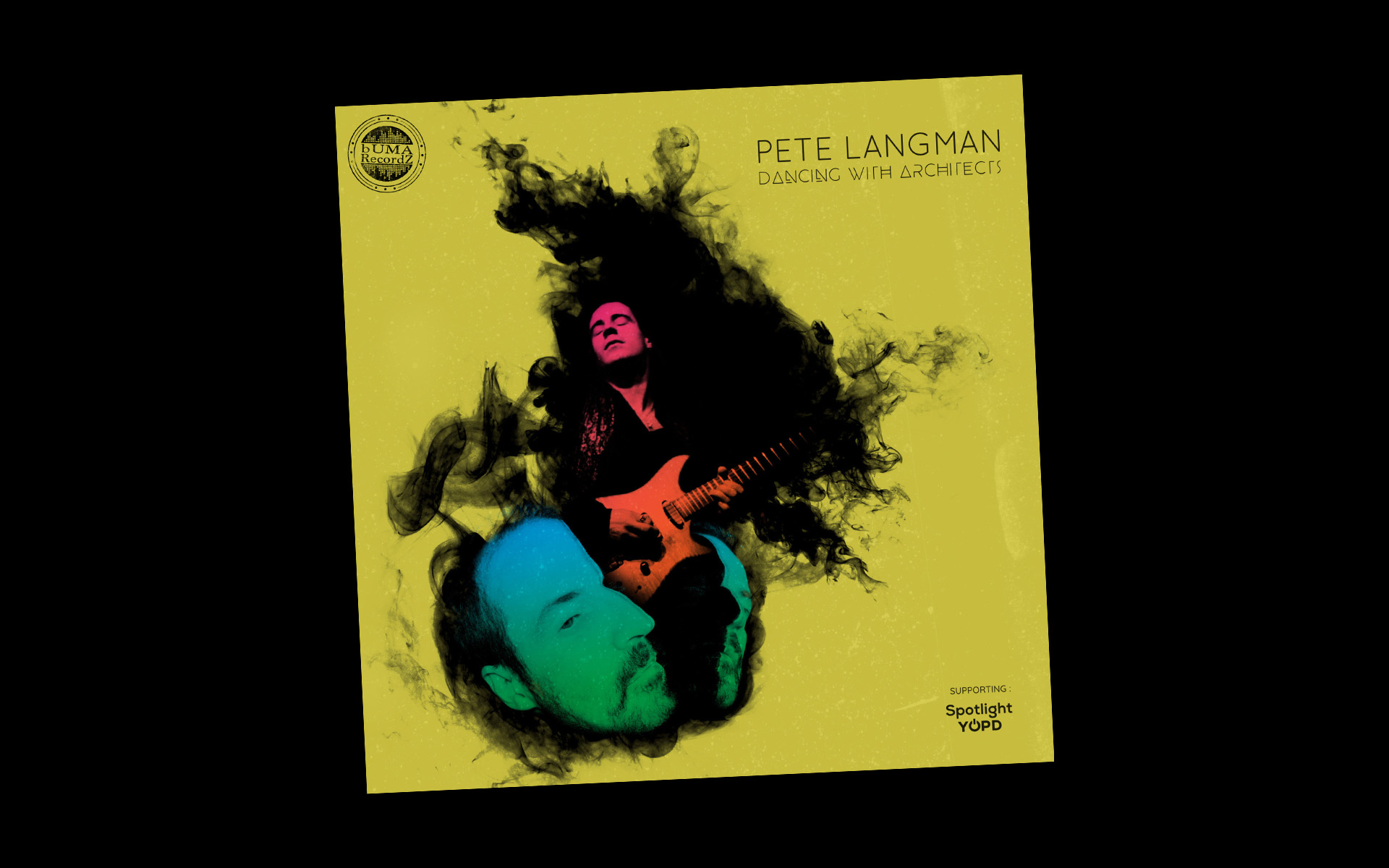
For a passionate guitar player, being diagnosed with Parkinson’s disease can mean losing the ability to do what they love most. The disease eventually forced Pete Langman to stop playing guitar, but when his former students resurrected and remixed recordings he made decades ago, it at least gave him a chance to find a new audience. Berklee Online instructor Bora Uslusoy spent the last six years bringing his mentor’s music back to life. Uslusoy, the author of the Writer, Engineer, Producer in the Home Studio course, mixed Langman’s Dancing with Architects and recently released it on his own label, bUMA RecordZ. The 10 guitar pieces were originally recorded in 1995.
“Back then, of course, we all had long hair, wore tight jeans and cowboy boots, and thought Bon Jovi was too soft,” jokes Uslusoy, who also played some guitar on the album. He says more reverently, “To this day, I still practice some of the exercises from the handouts Pete gave us in class.”
Uslusoy first studied with Langman at the Musicians Institute, where he took his Single String Techniques course.
Another former student of Langman, Jamie Hunt, came up with the idea to refresh Dancing with Architects when he reached out to Langman in 2018 to ask him if he still had a copy of the tunes he recorded in his basement studio in 1995. Hunt, along with his colleague Pat Heath, wanted to cover one of the tunes in their workshops for ESP Guitar Company.
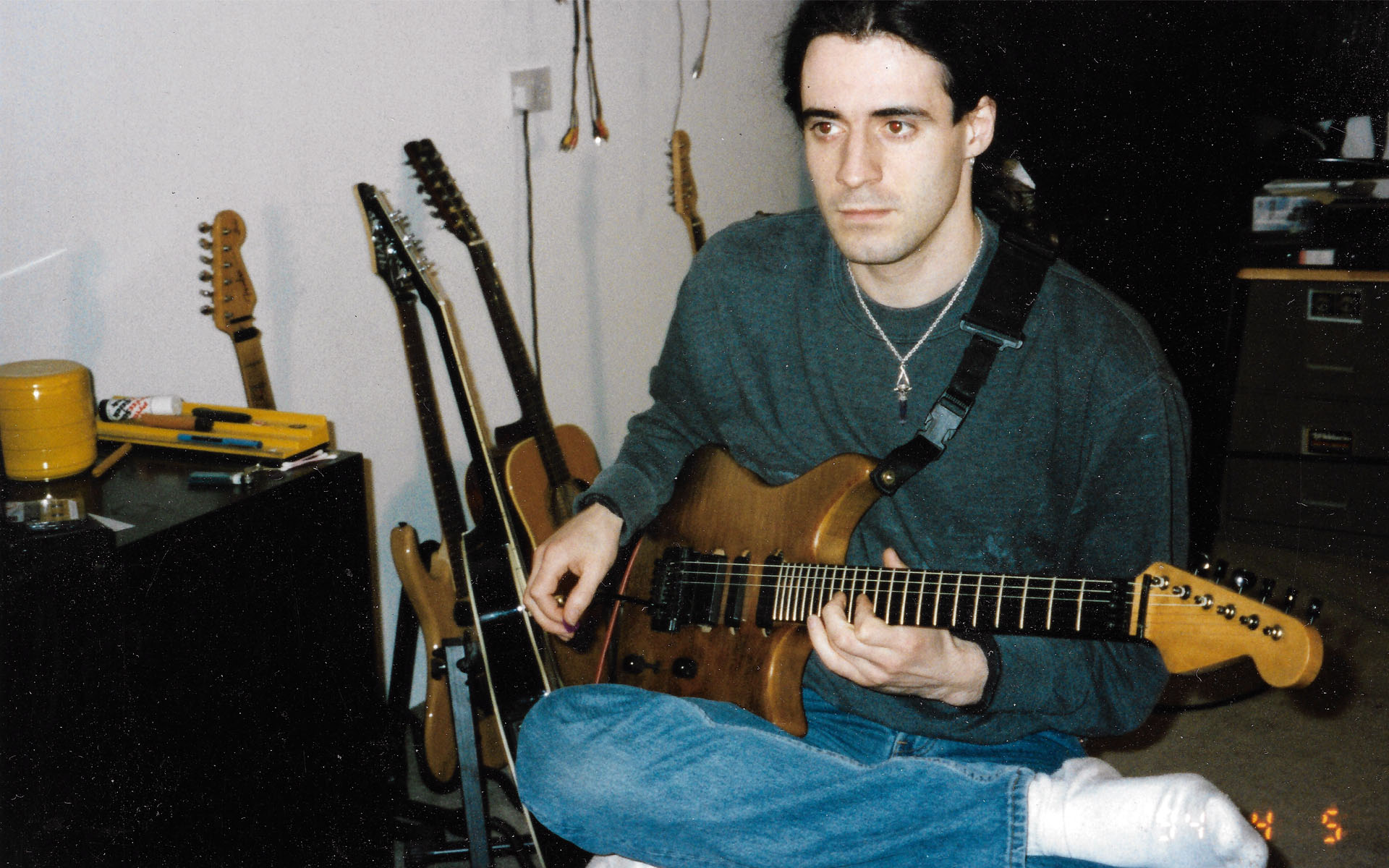
Even though the songs were finished, Hunt and Heath came up with the idea of expanding them, adding drums, new bass tracks, and guitar solos. Langman says he remembers sending them the tunes and thinking he couldn’t do much about them since his diagnosis in 2008. “I found them hidden away in my garden shed. When we found the masters, Pat and Jamie said, ‘Let’s put some new drums on it … it’s not like we don’t know enough drummers!’”
This project also helps fund Spotlight YOPD, a charity that raises awareness of and provides support and resources for those diagnosed with Young Onset Parkinson’s. Langman gave the project his blessing, but when he did, he had a few personnel ideas of his own. “When we started asking who wanted to contribute, Bora was one of the first on board, and he offered to help with the mixing and production work,” says Langman.
Langman says he had a different working relationship with Uslusoy in the 1990s than he did with most of Uslusoy’s classmates. “Bora was already pretty accomplished, dedicated, and talented,” he says. “As a result, I probably rode him harder than the majority of students.”
Initially asked to collaborate on the “Gladiators, Ready?” single in 2021, Uslusoy soon made it known that he wanted to mix the entire album—and release it on his label. As a mixing engineer, he mixed newly recorded tracks with tracks from 30 years ago, doing his best to preserve the authenticity of each song.
“What could be better than editing and mixing banging drums, earth-shaking bass parts, and screaming guitar solos with odd time signatures and jaw-breaking syncopations that smell like the ’80s and ’90s?” says Uslusoy.
The project required transferring the original 12-track tape reels to digital so new instruments could be added. Uslusoy also used Pro Tools’ Beat Detective to account for minor quirks that tapes tend to take on after 30 years.
“Extra fun was involved in tempo-mapping some of the songs, which had minor tempo fluctuations caused by tape degradation over the years,” says Uslusoy.
For this project, Langman served as an advisor, touching base with musicians and setting basic parameters. The rest was up to them! “We wanted contributions, not session players,” he says. “If I was surprised, it was at just how amazing it sounded when done. A real vindication of the whole idea!”
Langman listened to the whole album when it came out on July 31 in a local pub in Oxfordshire, England. “As they played the final track, the whole pub went quiet. No word of a lie, but there was a tear, maybe two,” says Langman.
For Uslusoy, working on Dancing with Architects was a chance to help a former instructor who had helped him. In preserving Langman’s music, he also brought together musicians from around the world: 12 guitarists, four bassists, five drummers, a blues harp player, and a sitar player across the album’s 10 songs.
“Fast-forward six years, quite a few emails, and tons of WeTransfer and Google Drive transactions, and here we are: we’ve finished the whole album,” says Uslusoy. “I loved working on this special record, and it is one of the greatest achievements of my engineering and production career.”
Uslusoy says he takes this learning experience into the classroom, where he not only teaches students about music production, but also the importance of professionalism, multitasking, technical skills, and human skills in the music workforce.
Langman says that this project brought him a sense of gratification. Although he could no longer actively contribute as a player, he found joy in listening to other musicians bring new life to the sounds he recorded decades ago.
“In some ways it has allowed me to mourn (if that doesn’t sound too morbid), a version of myself with whom I had unfinished business,” says Langman. “Ultimately, however, it lives or dies on its quality. Listen once because of the story: Listen again because you like what you hear.”